Earth Watch Report - Biological Hazards
Image Source
...
...
| Description |
| The
Ministry of Agriculture, Water and Forestry has issued an anthrax alert
to members of the public and farming communities in the Caprivi Region.
This comes after tests confirmed that an elephant died from the the
viral disease in the Masikili-Nakabolelelwa area recently. In a press
statement, the ministry's Permanent Secretary, Joseph Iita warned
members of the public at large not to touch, open or eat meat from any
animal carcass that dies on its own or of unknown causes. According to
the statement, by the time veterinary officials arrived at the scene of
the dead elephant, the local villagers in the area had already opened
the carcass and helped themselves to the meat. Urging people in the
vicinity of Masikili and Nakabolelelwa who had contact with the elephant
in question to visit the nearest clinic for appropriate advice, Iita
warned: "Handling such meat or eating meat from such animals puts the
people at serious risks of contracting anthrax". Iita said anthrax is a
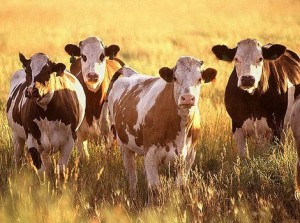
vaccine-preventable disease in livestock, and urged livestock owners to
vaccinate their animals against the disease once a year. |
| Biohazard name: | Anthrax (elephant) |
| Biohazard level: | 4/4 Hazardous |
| Biohazard desc.: | Viruses
and bacteria that cause severe to fatal disease in humans, and for
which vaccines or other treatments are not available, such as Bolivian
and Argentine hemorrhagic fevers, H5N1(bird flu), Dengue hemorrhagic
fever, Marburg virus, Ebola virus, hantaviruses, Lassa fever,
Crimean-Congo hemorrhagic fever, and other hemorrhagic or unidentified
diseases. When dealing with biological hazards at this level the use of a
Hazmat suit and a self-contained oxygen supply is mandatory. The
entrance and exit of a Level Four biolab will contain multiple showers, a
vacuum room, an ultraviolet light room, autonomous detection system,
and other safety precautions designed to destroy all traces of the
biohazard. Multiple airlocks are employed and are electronically secured
to prevent both doors opening at the same time. All air and water
service going to and coming from a Biosafety Level 4 (P4) lab will
undergo similar decontamination procedures to eliminate the possibility
of an accidental release. |
| Symptoms: | |
| Status: | confirmed |
...
By Luqman Cloete, 25 July 2013
THE
Ministry of Agriculture, Water and Forestry has issued an anthrax alert
to members of the public and farming communities in the Caprivi Region.
This comes after tests confirmed that an elephant died from the the viral disease in the Masikili-Nakabolelelwa area recently.
In
a press statement, the ministry's Permanent Secretary, Joseph Iita
warned members of the public at large not to touch, open or eat meat
from any animal carcass that dies on its own or of unknown causes.
According
to the statement, by the time veterinary officials arrived at the scene
of the dead elephant, the local villagers in the area had already
opened the carcass and helped themselves to the meat.
Urging
people in the vicinity of Masikili and Nakabolelelwa who had contact
with the elephant in question to visit the nearest clinic for
appropriate advice, Iita warned: "Handling such meat or eating meat from
such animals puts the people at serious risks of contracting anthrax".
Iita
said anthrax is a vaccine-preventable disease in livestock, and urged
livestock owners to vaccinate their animals against the disease once a
year.
"Anthrax carcasses should be disposed of by deep burial or
burning without opening them. This limits contamination of the
environment by the causal bacteria," Iita added.
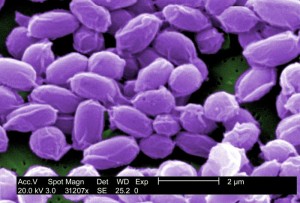
Anthrax is a
serious illness caused by a spore-forming bacterium, Bacillus anthracis.
Although anthrax affects mainly livestock and wild game, humans can
become infected through direct or indirect contact with sick animals.
Normally, anthrax isn't transmitted from person to person, but in rare
cases, anthrax skin lesions may be contagious.
Most often, anthrax
bacteria enter the human body through a wound in the skin. People can
also become infected by eating contaminated meat or inhaling the spores.
The signs and symptoms, which depend on the infection, can range from skin sores to nausea and vomiting or shock.
Iita
said prompt treatment with antibiotics can cure most anthrax infections
contracted through the skin or contaminated meat. He said inhaled
anthrax is more difficult to treat and can be fatal.
luqman@namibian.com.na
luqman@namibian.com.na
Anthrax alert in Caprivi
Luqman Cloete
THE
Ministry of Agriculture, Water and Forestry has issued an anthrax alert
to members of the public and farming communities in the Caprivi Region.
This comes after tests confirmed that an elephant died from the the viral disease in the Masikili-Nakabolelelwa area recently.
In
a press statement, the ministry’s Permanent Secretary, Joseph Iita
warned members of the public at large not to touch, open or eat meat
from any animal carcass that dies on its own or of unknown causes.
According
to the statement, by the time veterinary officials arrived at the scene
of the dead elephant, the local villagers in the area had already
opened the carcass and helped themselves to the meat.
Urging
people in the vicinity of Masikili and Nakabolelelwa who had contact
with the elephant in question to visit the nearest clinic for
appropriate advice, Iita warned: “Handling such meat or eating meat from
such animals puts the people at serious risks of contracting anthrax”.
Iita
said anthrax is a vaccine-preventable disease in livestock, and urged
livestock owners to vaccinate their animals against the disease once a
year.
“Anthrax carcasses should be disposed of by deep burial or
burning without opening them. This limits contamination of the
environment by the causal bacteria,” Iita added.
Anthrax is a
serious illness caused by a spore-forming bacterium, Bacillus anthracis.
Although anthrax affects mainly livestock and wild game, humans can
become infected through direct or indirect contact with sick animals.
Normally, anthrax isn’t transmitted from person to person, but in rare
cases, anthrax skin lesions may be contagious.
Most often, anthrax
bacteria enter the human body through a wound in the skin. People can
also become infected by eating contaminated meat or inhaling the spores.
The signs and symptoms, which depend on the infection, can range from skin sores to nausea and vomiting or shock.
Iita
said prompt treatment with antibiotics can cure most anthrax infections
contracted through the skin or contaminated meat. He said inhaled
anthrax is more difficult to treat and can be fatal.
- See more at: http://www.namibian.com.na/indexx.php?id=1758&page_type=story_detail&category_id=1#sthash.Y2uy6ITp.dpuf
...