Global Weather Phenomenon-Natural/Technological Disasters-Space Events-Epidemic/Biological Hazards-
Nuclear Events :
News Affiliate of Family Survival Protocol.com
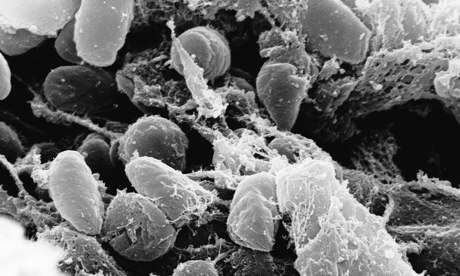
Scanning
electron micrograph depicting a mass of Yersinia pestis bacteria (the
cause of bubonic plague) in the foregut of the flea vector
Credit: Rocky Mountain Laboratories, NIAID, NIH http://www3.niaid.nih.gov/biodefense/Public/Images.htm
Via Wikipedia.org
.....
The
New Mexico Department of Health (NMDOH) has reported today the first
case of human plague of the year in the state and in the United States
in a man from Torrance County. Confirmatory testing is being conducted
at the NMDOH's Scientific Laboratory Division. An environmental
investigation will take place at the man's home to look for ongoing risk
to others in the surrounding area. "An epidemiologic investigation and
an environmental investigation around the home of the plague case are
being conducted by NMDOH staff to look for ongoing risk and to ensure
the safety of the immediate family and neighbors," said Department of
Health Secretary Retta Ward, MPH. "Staff will go door to door to
neighbors near the case to inform them about plague found in the area
and educate them on reducing their risk. Health care providers and
others close to the patient who have been determined to have been
exposed are taking preventive antibiotic therapy." Plague is an
infectious disease caused by the bacterium, Yersinia pestis. It is found
in animals throughout the world, most commonly rats but other rodents
like ground squirrels, prairie dogs, chipmunks, rabbits and voles. Fleas
typically serve as the vector of plague. Human cases have been linked
to the domestic cats and dogs that brought infected fleas into the
house. People can also get infected through direct contact with an
infected animal, through inhalation and in the case of pneumonic plague,
person to person. Yersinia pestis is treatable with antibiotics if
started early enough. There are three forms of human plague; bubonic,
septicemic and pneumonic.
Biohazard name:
Yersinia Pestis
Biohazard level:
4/4 Hazardous
Biohazard desc.:
Viruses
and bacteria that cause severe to fatal disease in humans, and for
which vaccines or other treatments are not available, such as Bolivian
and Argentine hemorrhagic fevers, H5N1(bird flu), Dengue hemorrhagic
fever, Marburg virus, Ebola virus, hantaviruses, Lassa fever,
Crimean-Congo hemorrhagic fever, and other hemorrhagic or unidentified
diseases. When dealing with biological hazards at this level the use of a
Hazmat suit and a self-contained oxygen supply is mandatory. The
entrance and exit of a Level Four biolab will contain multiple showers, a
vacuum room, an ultraviolet light room, autonomous detection system,
and other safety precautions designed to destroy all traces of the
biohazard. Multiple airlocks are employed and are electronically secured
to prevent both doors opening at the same time. All air and water
service going to and coming from a Biosafety Level 4 (P4) lab will
undergo similar decontamination procedures to eliminate the possibility
of an accidental release.
The New Mexico Department of Health (NMDOH)
is reporting a case of plague in a 57-year-old man from Torrance County
who is currently hospitalized in critical condition. Confirmatory
testing is being conducted at the NMDOH’s Scientific Laboratory
Division. This is the first human case of plague in New Mexico and in
the United States this year. An environmental investigation will take
place at the man’s home to look for ongoing risk to others in the
surrounding area. “An epidemiologic investigation and an environmental investigation around the home of the plague case are being conducted by NMDOH staff to look for ongoing risk and to ensure the safety of the immediate family and neighbors,” said Department of Health Secretary Retta Ward, MPH. “Staff
will go door to door to neighbors near the case to inform them about
plague found in the area and educate them on reducing their risk. Health
care providers and others close to the patient who have been determined
to have been exposed are taking preventive antibiotic therapy.”
Plague
is a bacterial disease of rodents and is generally transmitted to
humans through the bites of infected fleas, but can also be transmitted
by direct contact with infected animals, including rodents, wildlife and
pets. “Plague cases have occurred every month of the year in New Mexico, but most cases usually occur in the summer months,” said Dr. Paul Ettestad, public health veterinarian for the Department of Health. “It
is especially important now that it is warming up to take precautions
to avoid rodents and their fleas which can expose you to plague. Pets
that are allowed to roam and hunt can bring infected fleas from dead
rodents back into the home, putting you and your children at risk.”
To prevent plague, the Department of Health recommends:
Male Xenopsylla cheopis (oriental rat flea) engorged with blood. This
flea is the primary vector of plague in most large plague epidemics in
Asia, Africa, and South America. Both male and female fleas can transmit
the infection.
Image Source : Wikimedia.Org
Author
Centers for Disease Control and Prevention
.....
Biological Hazard
Peru
Province of Ascope, Mocan [District of Casa Grande]
The Regional Health Management reported Tuesday, 10 Dec 2013, the
1st victim in 2013 of pneumonic plague in the La Libertad region. It is a
17-year-old, according to the regional manager of health, Jose
Evangelista. The regional official did not name the victim, although it
was known that he lived with his family in the village of Mocan, located
in the district of Casa Grande, in the province of Ascope. As reported
by Evangelista, before entering Trujillo Regional Teaching Hospital,
where the victim died, he spent several hours in the home of relatives
in the village El Milagro in Huanchaco district center. In the area,
said the regional manager of health, would have been about 150 families.
Therefore, a health brigade came to the area to conduct a campaign to
prevent the plague bacteria from spreading.
Biohazard name:
Plague (pneumonic)
Biohazard level:
4/4 Hazardous
Biohazard desc.:
Viruses and bacteria that cause severe to fatal disease in humans,
and for which vaccines or other treatments are not available, such as
Bolivian and Argentine hemorrhagic fevers, H5N1(bird flu), Dengue
hemorrhagic fever, Marburg virus, Ebola virus, hantaviruses, Lassa
fever, Crimean-Congo hemorrhagic fever, and other hemorrhagic or
unidentified diseases. When dealing with biological hazards at this
level the use of a Hazmat suit and a self-contained oxygen supply is
mandatory. The entrance and exit of a Level Four biolab will contain
multiple showers, a vacuum room, an ultraviolet light room, autonomous
detection system, and other safety precautions designed to destroy all
traces of the biohazard. Multiple airlocks are employed and are
electronically secured to prevent both doors opening at the same time.
All air and water service going to and coming from a Biosafety Level 4
(P4) lab will undergo similar decontamination procedures to eliminate
the possibility of an accidental release.
An ICRC-led programme is working to reduce prison rat populations
Two
cases of pneumonic plague - more deadly than bubonic plague - have been
reported in Madagascar, a health official has told the BBC.
It comes after it was confirmed that there was a deadly
outbreak of the bubonic plague in a village in the north-west of the
island.
Pneumonic plague can be inhaled and transmitted between humans without involvement of animals or fleas.
It is the most virulent and least common form of plague.
It can kill within 24 hours. 'Most deaths'
Bubonic plague hit a village near Madagascar's north-western town of Mandritsara last week.
At least 20 people were reported to have died.
The plague is spread because of poor hygiene
The Pasteur Institute of Madagascar confirmed on Tuesday that
tests taken from some bodies in the village, near the north-western town
of Mandritsara, last week showed that they had died of the plague.
However, it did not say how many people had died.
Pneumonic plague is caused by the same bacteria that occur in
bubonic plague - the Black Death that killed an estimated 25 million
people in Europe during the Middle Ages.
But while bubonic plague is usually transmitted by flea bites
and can be treated with antibiotics, pneumonic plague is easier to
contract and if untreated, has a very high case-fatality ratio, experts
say.
At least 21 people have died this week in northern Madagascar after contracting pneumonic plague, the Health Ministry says.
According to the reports, a village near the northwestern town of
Mandritsara on the island of Madagascar is where at least 21 people
perished following a deadly outbreak of the plague, the ministry said on
Wednesday.
Medical experts from the Pasteur Institute in Madagascar confirmed
tests had identified their cause of death as the bubonic plague, a
disease that claimed 25 million lives in the Middle Ages.
Male Xenopsylla cheopis (oriental rat flea) engorged with blood. This
flea is the primary vector of plague in most large plague epidemics in
Asia, Africa, and South America. Both male and female fleas can transmit
the infection.
Image Source : Wikimedia.Org
Author
Centers for Disease Control and Prevention
A deadly outbreak of the bubonic plague is running rampant on the
island of Madagascar, medical experts have confirmed. Tests established
the disease was responsible for the deaths of at least 20 villagers in
the northwestern town of Mandritsara. The island nation last year
recorded the world's highest number of plague-related casualties, with
60 lives claimed by the flea-borne disease. Bubonic plague - also known
as the Black Death - wiped out an estimated 25 million people in Europe
during the Middle Ages but there have been few instances reported in
recent years. Health officials are investigating the cause of the
outbreak, thought to have originated in prisons with a prevalence of
rats that carry the disease. The Pasteur Institute said towns and cities
faced increased risk of infection as ongoing political crises took its
toll on living conditions. It is hoped a second round of presidential
elections on December 20 will end the political deadlock.
Biohazard name:
Plague (bubonic, human)
Biohazard level:
4/4 Hazardous
Biohazard desc.:
Viruses and bacteria that cause severe to fatal disease in humans,
and for which vaccines or other treatments are not available, such as
Bolivian and Argentine hemorrhagic fevers, H5N1(bird flu), Dengue
hemorrhagic fever, Marburg virus, Ebola virus, hantaviruses, Lassa
fever, Crimean-Congo hemorrhagic fever, and other hemorrhagic or
unidentified diseases. When dealing with biological hazards at this
level the use of a Hazmat suit and a self-contained oxygen supply is
mandatory. The entrance and exit of a Level Four biolab will contain
multiple showers, a vacuum room, an ultraviolet light room, autonomous
detection system, and other safety precautions designed to destroy all
traces of the biohazard. Multiple airlocks are employed and are
electronically secured to prevent both doors opening at the same time.
All air and water service going to and coming from a Biosafety Level 4
(P4) lab will undergo similar decontamination procedures to eliminate
the possibility of an accidental release.
Once feared as the Black Death, the rodent-borne disease that wiped out
one-third of the world’s population in the Middle Ages, bubonic plague
has killed 20 villagers in Madagascar in one of the worst outbreaks
globally in recent years, health experts have confirmed.
The confirmation that bubonic plague was responsible for the deaths
last week near the northwestern town of Mandritsara follows a warning in
October from the International Committee of the Red Cross that the
island nation was at risk of a plague epidemic.
The Pasteur Institute of Madagascar revealed on Tuesday that tests
taken from bodies in the village last week showed they had died of the
bubonic plague. The institute said it was concerned the disease could
spread to towns and cities where living standards have declined since a
coup in 2009.
The deaths are doubly concerning, because the outbreak occurred both
outside the island’s normal plague season, which runs from July to
October, and apparently at a far lower elevation than usual – suggesting
it might be spreading.
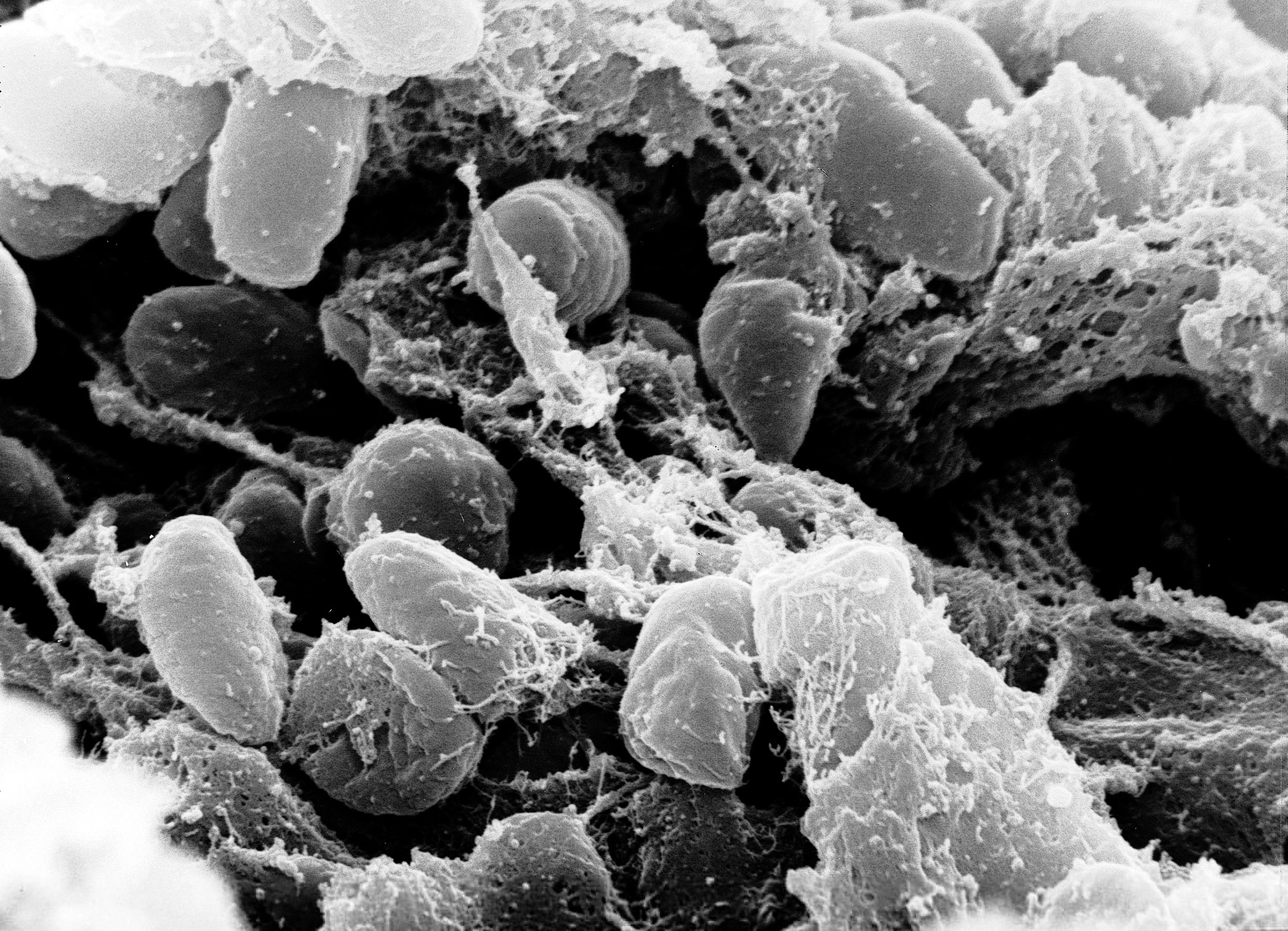
Bacteria that cause bubonic plague. The disease is spread by Xenopsylla cheopis fleas, whose main host is the black rat. Photograph: Rocky Mountain Laboratories/AP
Once feared as the Black Death – the
rodent-borne disease that wiped out a third of the world's population in
the Middle Ages – bubonic plague has killed 20 villagers in Madagascar in one of the worst outbreaks globally in recent years, health experts have confirmed.
The
confirmation that bubonic plague was responsible for the deaths last
week near the north-western town of Mandritsara follows a warning in
October from the International Committee of the Red Cross (ICRC) that
the island nation was at risk of a plague epidemic.
The Pasteur
Institute of Madagascar revealed on Tuesday that tests taken from bodies
in the village last week showed that they had died of bubonic plague.
The institute added it was concerned the disease could spread to towns
and cities where living standards have declined since a coup in 2009.
The
deaths are doubly concerning because the outbreak occurred both outside
the island's normal plague season, which runs from July to October, and
apparently at a far lower elevation than usual – suggesting it might be
spreading.
Bubonic plague, which has disappeared from Europe and
large parts of the globe, is spread by bites from plague-carrying rat
fleas – Xenopsylla cheopis – whose main host is the black rat.
In Europe the threat of the Black Death pandemic, which appeared with
black rats brought by merchant ships from Asia, eventually died out as
black rats were displaced by brown rats and health and hygiene improved.



 Last year about 60 people died of plague in Madagascar, the highest number globally.