DAHBOO77
Published on Jan 9, 2014
These are the latest quake updates for the US!
http://spaceweather.com/
http://quakes.globalincidentmap.com/
.....
Spaceweather.com
by Dr. Tony Phillips.
GROWING QUIET?
Giant sunspot
AR1944
has not unleashed a significant flare in more than 48 hours. The
growing quiet could be the calm between storms. AR1944 has an unstable
'beta-gamma-delta' magnetic field that harbors energy for
X-class flares.
As
predicted, a CME hit Earth's magnetic field on Jan. 9th (20:00 UT). The
impact was weaker than expected, however, and it failed to produce
widespread geomagnetic storms. Nevertheless, some
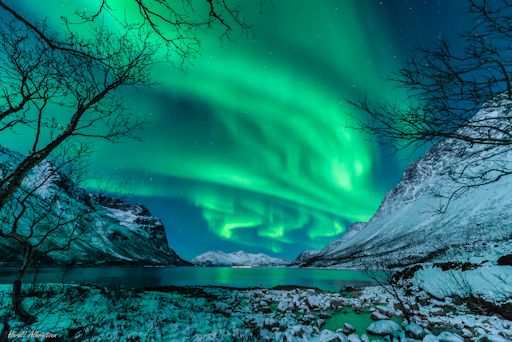
beautiful auroras appeared around the Arctic Circle. Harald Albrigtsen sends this picture from Tromsø, Norway:
It
was dark in Norway when the CME arrived, so observers there witnessed a
nice display. By the time night fell over North America, however, the
lights had faded. US observers saw nothing remarkable.
More
auroras are possible on Jan. 10th as Earth passes through the magnetic
wake of the CME. NOAA forecasters estimate a 85% chance of polar
geomagnetic storms before the day is over.
.....
Massive Solar storm strikes Earth following monster flare
 Newsnation6
Published on Jan 10, 2014
A
large coronal mass ejection has reached Earth -- days after the Sun
sent a massive burst of solar wind and electromagnetic radiation towards
our planet. While causing no major geomagnetic storm, it has produced
spectacular auroras in northern Europe.
The coronal mass ejection
(CME) arrived near Earth at 2:32pm EST (7:32pm GMT) on Thursday, with
its effects expected to continue throughout Friday, according to US
National Oceanic and Atmospheric Administration (NOAA).
NOAA's
Space Weather Prediction Center has issued a warning of a geomagnetic
storm with "minor disruptions to communications and GPS."
While
the world's economies braced for possible blackouts in high-frequency
airline and military communications, disruptions to GPS signals and
power grids, enthusiasts in the northern hemisphere rushed outdoors in
the hope of viewing the stunning aurora borealis as far south as
Colorado.
However, American aurora spotters have been
disappointed, as, according to spaceweather.com, the CME's impact was
"weaker than expected" and failed to produce widespread storms. Some
frustrated Twitter users also blamed cloudy skies for not being able to
see the northern lights.
Observers were luckier around the Arctic
Circle in Norway, where a dark and clear night at the time of impact, as
well as more favorable latitude, put an aurora on display.
NOAA
forecasters still estimated an 85 percent chance of polar geomagnetic
storms before the end of Friday, and media cheered the sky watchers by
saying there remains a chance of some clear aurora sightings Friday
night.
The CME that stroke the Earth has been associated with the
large X1.2-class solar flare that was unleashed from a giant sunspot
AR1944 on January 7. The flare has been described as the most powerful
this year so far, with X-class denoting the most severe intensity.
,,,,,

Solar storm strikes Earth following monster flare (VIDEO)

This
January 7, 2014 handout image captured by NASA's Solar Dynamics
Observatory shows a false-color composite image from a blast of activity
originating from an active sunspot region at the center of the sun's
disk (AFP Photo)
A large coronal mass ejection has reached Earth –
days after the Sun sent a massive burst of solar wind and
electromagnetic radiation towards our planet. While causing no major
geomagnetic storm, it has produced spectacular auroras in northern
Europe.
The coronal mass ejection (CME) arrived near Earth at 2:32pm EST
(7:32pm GMT) on Thursday, with its effects expected to continue
throughout Friday, according to US National Oceanic and
Atmospheric Administration (NOAA).
NOAA’s Space Weather Prediction Center has issued a warning of a
geomagnetic storm with
“minor disruptions to communications
and GPS.”
While the world’s economies braced for possible blackouts in
high-frequency airline and military communications, disruptions
to GPS signals and power grids, enthusiasts in the northern
hemisphere rushed outdoors in the hope of viewing the stunning
aurora borealis as far south as Colorado.
However, American aurora spotters have been disappointed, as,
according to spaceweather.com, the CME’s impact was
“weaker
than expected” and failed to produce widespread storms. Some
frustrated Twitter users also blamed cloudy skies for not being
able to see the northern lights.
Observers were luckier around the Arctic Circle in Norway, where
a dark and clear night at the time of impact, as well as more
favorable latitude, put an aurora on display.
NOAA forecasters still estimated an 85 percent chance of polar
geomagnetic storms before the end of Friday, and media cheered
the sky watchers by saying there remains a chance of some clear
aurora sightings Friday night.
The CME that stroke the Earth has been associated with the large
X1.2-class solar flare that was unleashed from a giant sunspot
AR1944 on January 7. The flare has been described as the most
powerful this year so far, with X-class denoting the most severe
intensity.
Read More and Watch Videos Here
.....
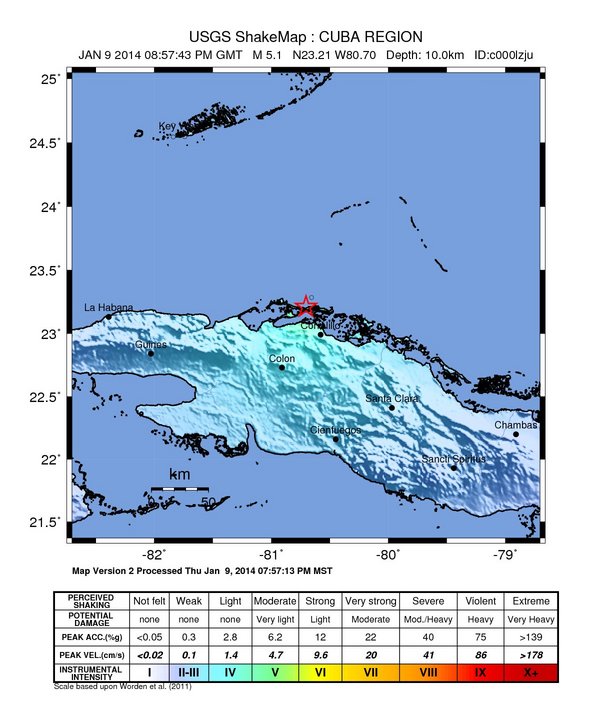
2014-01-09 20:57:43 UTC

Event Time
- 2014-01-09 20:57:43 UTC
- 2014-01-09 15:57:43 UTC-05:00 at epicenter
- 2014-01-09 14:57:43 UTC-06:00 system time
Location
23.189°N 80.677°W depth=10.0km (6.2mi)
Nearby Cities
- 24km (15mi) NNW of Corralillo, Cuba
- 36km (22mi) NE of Marti, Cuba
- 51km (32mi) N of Los Arabos, Cuba
- 56km (35mi) ENE of Cardenas, Cuba
- 174km (108mi) E of Havana, Cuba
....
Tectonic Summary
The
January 9, 2014 M5.1 earthquake in the Gulf of Mexico occurred along
the northern coast of west-central Cuba at shallow crustal depths, ~28km
from Corralillo, Cuba and ~172 km east of Havana, Cuba.
The
island of Cuba lies within the North American plate and is bounded by
the Bahamas Platform and Florida Straits to the north and the North
America-Caribbean plate boundary to the south. The plate boundary, a
left-lateral transform, defines the southeast coast of the island and
causes uplift of the Sierra Maestra. In the vicinity of the January 9
earthquake, a former plate boundary suture and several faults,
collectively termed the Nortecubana Fault system, bound the northern
coast of Cuba. Additionally, several smaller crustal faults, including
the left-lateral Hicacos Fault and Las Villas fault are located in the
general vicinity of the January 9 earthquake. The region of the January 9
earthquake is relatively quiet seismically. Only 6 documented events
ranging from M3.0-5.6 occurred over the past 75 years within 200 km of
the epicenter. The M5.6 event, which occurred in 1939, also took place
along the northern coast of Cuba in the vicinity of the Nortecubana
Fault system. The January 9 event occurred 686 km ESE of the September
2006 M5.8 Gulf of Mexico earthquake.
.....
.....



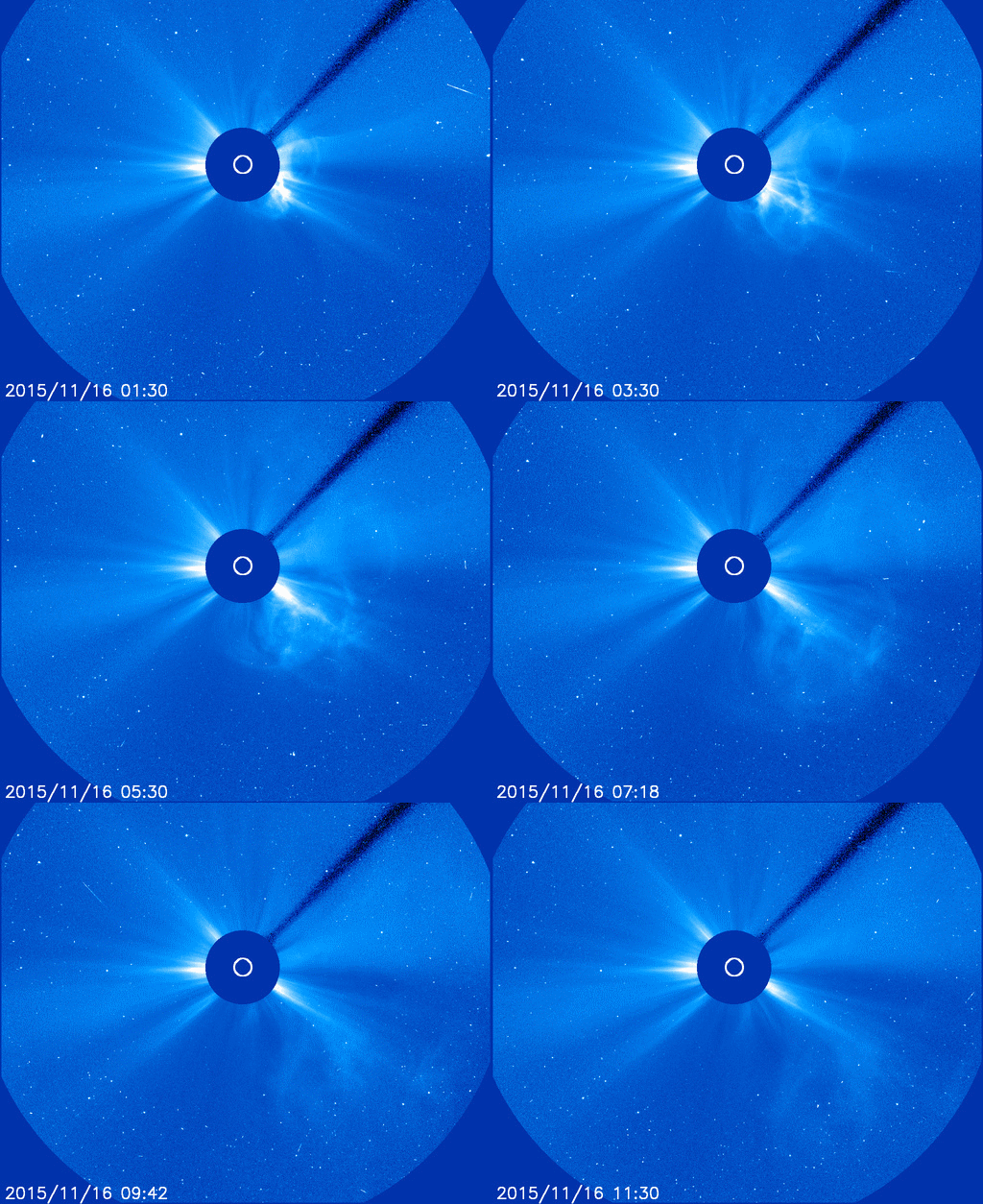

 A series of images from NASA's Solar Dynamics
Observatory show the first moments of an X-class significant solar flare
in different wavelengths of light. Flares are often related to coronal
mass ejections. Photo: Reuters