Showing posts with label Neonicotinoid. Show all posts

Friday, February 7, 2014

​Bees exposed to "field-realistic" doses of insecticides gather less than a half the pollen that they normally do, dooming their young to starvation, state UK researches

Starving hives: Pesticides cause bees to collect 57% less pollen, study says

Published time: February 02, 2014 21:15
Edited time: February 04, 2014 09:23


Reuters / Leonhard Foeger


 While some scientists hailed the findings, pesticide makers remained unimpressed

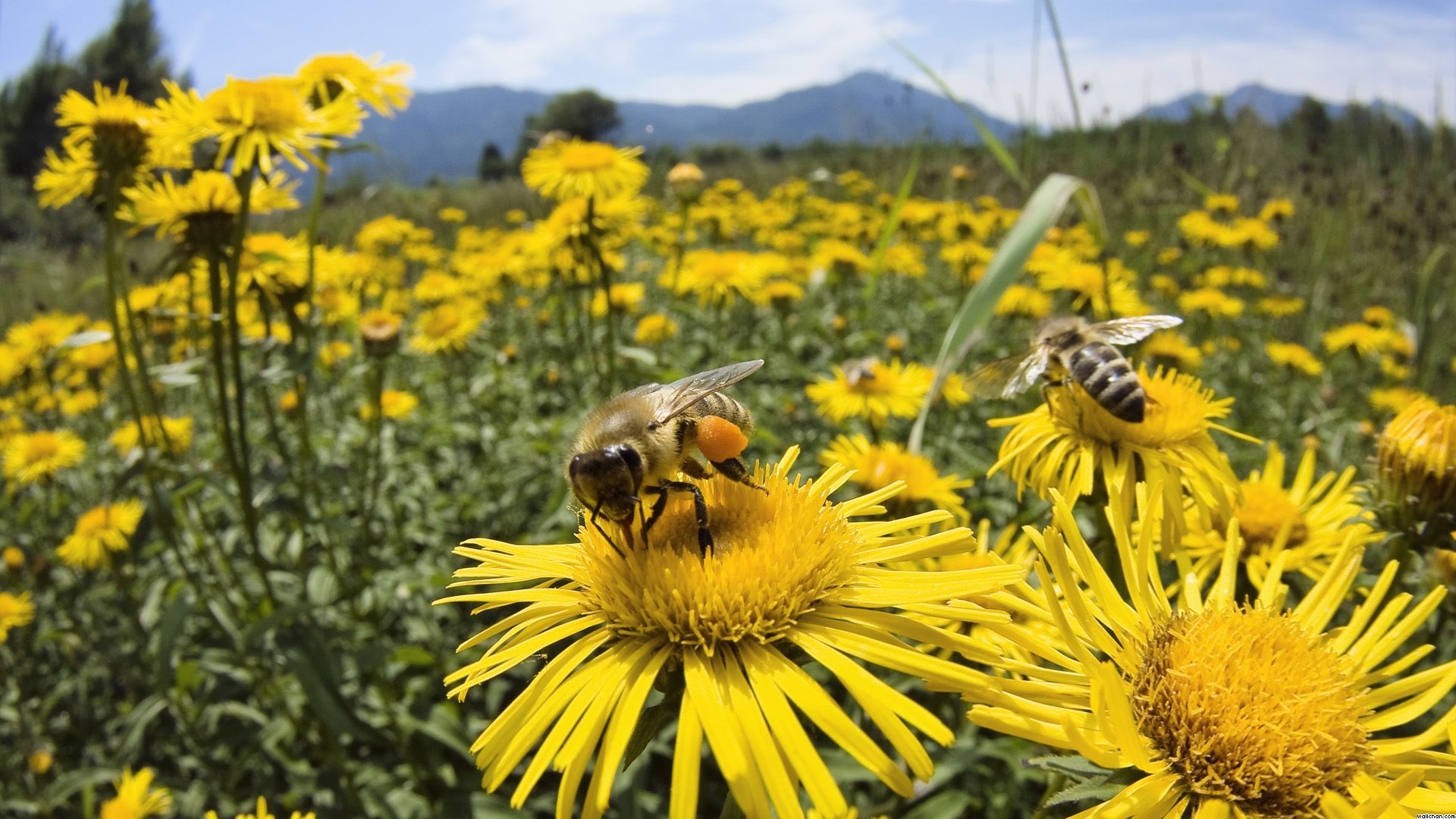
In a spin-off of their earlier study, a team of British scientists have revealed how the neurotoxic chemicals contained in agricultural neonicotinoids affect the very basic function of the honeybees – the gathering of pollen, or flower nectar.
“Pollen is the only source of protein that bees have, and it is vital for rearing their young. Collecting it is fiddly, slow work for the bees and intoxicated bees become much worse at it. Without much pollen, nests will inevitably struggle,” explained University of Sussex professor Dave Goulson, who has led the study. His comments were made in a statement released alongside the research.
Goulson’s latest paper called “Field realistic doses of pesticide imidacloprid reduce bumblebee pollen foraging efficiency” was published at the end of January in peer-reviewed journal Ecotoxicology.
The scientists exposed some of the studied bees to low doses of imidacloprid and tracked their movement with the help of electronic tags. Unexposed bees were also tracked, and each insect flying out and returning to a hive was weighed to find out the amount of pollen it gathered.
It turned out that bees exposed to the neonicotinoid brought back pollen from only 40 percent of their trips asopposed to 63 percent of useful trips which their “healthy” counterparts undertook.
Intoxicated bees cut the amount of pollen gathered by nearly a third - overall, the comparative study showed that the hives exposed to the pesticide received 57 percent less pollen.
“Even near-infinitesimal doses of these neurotoxins seem to be enough to mess up the ability of bees to gather food. Given the vital importance of bumblebees as pollinators, this is surely a cause for concern,” Hannah Feltham of the University of Stirling, another member of the research team, stated.

Read More Here
Enhanced by Zemanta

Wednesday, August 21, 2013

Scientists Discover Fungicide and Pesticide are Killing Bees―and It's Worse Than You Thought


                                                           Image courtesy of Wikimedia Commons
                                                                        via Cornucopia.org

By Dr. Mercola
Bee populations are dwindling across the globe, putting one in three food crops like apples and almonds, which depend on pollination from bees, at serious risk.
In the US, beekeepers have reported annual losses of about 33 percent of their hives each year, a level of loss that the Agricultural Research Services reports could threaten the economic viability of the bee pollination industry if it continues1 (and some beekeepers report much higher losses than this at upwards of 70 or, in some cases, 100 percent).
Despite the growing losses, the causes of the massive bee die-offs have yet to be firmly defined, although accumulating research is pointing to a cocktail of agricultural chemicals as a likely primary culprit.

New Study: Fungicides May Be Killing Bees

Systemic neonicotinoid pesticides have been increasingly blamed for bee deaths (and were implicated in a recent mass bee die-off of 25,000 bumblebees along with millions of bee deaths in Canada), prompting the European Union (EU) to ban them for two years.
Now, it appears measures that target single classes of pesticides, though a move in the right direction, may be falling short. In a first-of-its-kind study, researchers analyzed pollen from bee hives in seven major crops and found 35 different pesticides along with high fungicide loads.2 Each sample contained, on average, nine different pesticides and fungicides, although one contained 21 different chemicals.
Furthermore, when the pollen was fed to healthy bees, they had a significant decline in the ability to resist infection with the Nosema ceranae parasite, which has been implicated in Colony Collapse Disorder (CCD).
What makes the research particularly unique is the concerning data on fungicides, which has so far been assumed to be safe for bees. While farmers are advised to avoid spraying pesticides when bees are present, for instance, fungicides contain no such warnings.
The researchers explained:
“While fungicides are typically seen as fairly safe for honey bees, we found an increased probability of Nosema infection in bees that consumed pollen with a higher fungicide load. Our results highlight a need for research on sub-lethal effects of fungicides and other chemicals that bees placed in an agricultural setting are exposed to.”
Also concerning, the researchers found that the bees in the study collected pollen almost exclusively from weeds and wildflowers, and this, too, was contaminated with pesticides even though they were not directly sprayed.
“It’s not clear whether the pesticides are drifting over to those plants but we need take a new look at agricultural spraying practices,” the study’s lead author told Quartz.3

US Bill Introduced to Take Neonicotinoids Off the Market

Following the June incident that killed 25,000 bumblebees, the Oregon Department of Agriculture (ODA) announced that they were restricting the use of 18 pesticide products containing dinotefuran, a type of neonicotinoid.
These chemicals are typically applied to seeds before planting, allowing the pesticide to be taken up through the plant’s vascular system as it grows. As a result, the chemical is expressed in the pollen and nectar of the plant, and hence the danger to bees and other pollinating insects.
As mentioned, the EU has also banned these pesticides, beginning December 1, 2013, to study their involvement with large bee kills they, too, are experiencing.
To date, however, the US Environmental Protection Agency (EPA) has failed to take action and has already been sued once by beekeepers and environmental groups for failing to protect bees from neonicotinoid pesticides.
They have also green-lighted another pesticide that is a close cousin to these toxic chemicals (sulfoxaflor) and, as a result, several beekeeping organizations and beekeepers have filed a legal action against the EPA for approving sulfoxaflor, which is considered by many to be a "fourth-generation neonicotinoid.
In the US, the tide may be turning, however, as just last month the “Save America’s Pollinators Act” was introduced. If passed, this bill, HR 2692, would require the EPA to pull neonicotinoid pesticides from the market until their safety is proven. Please contact your representative today to voice your support for this incredibly important issue.

US Almond Crops Are Already At Risk

We’re beginning to get a taste of what the world would be like without bees. This year, many of the 6,000 almond orchard owners in California simply could not find enough bees to pollinate their almond trees, at any price. This is alarming, considering that 80 percent of the world’s almonds come from California’s central valley, an 800,000-acre area of almond orchards that are 100 percent dependent on bees pollinating the trees. Surprisingly, almonds are the number one agricultural product in California.
Fortunately, unsurpassed efforts that included persuading beekeepers as far away as Florida to ship their bees cross country, delayed bloom, and unseasonably good weather thereafter allowed almond growers to dodge the bullet – this year – despite having fewer and weaker-than-ever hives...
This narrowly achieved success may lead some to reach the mistaken conclusion that beekeepers’ concerns are overblown, but don’t be fooled. One beekeeper went so far as to say he believes the beekeeper industry is doomed and cannot survive for more than another two to three years unless drastic changes are implemented immediately...

What Are Some of the Top Theories for Bee Die-Offs?

Environmental chemicals are a forerunner for what’s causing so many bees to die, but it’s likely that there are multiple factors at play here. Among the top proposed culprits include:
    • Pesticides, insecticides and fungicides – Neonicotinoids, such as Imidacloprid and Clothianidin, kills insects by attacking their nervous systems. These are known to get into pollen and nectar, and can damage beneficial insects such as bees.
    • Malnutrition/Nutritional deficiencies – Many beekeepers place the hives near fields of identical crops, which may result in malnutrition as the bees are only getting one type of nectar. Essentially, this theory is identical to that of human nutrition; we need a wide variety of nutrients from different foods.
If you keep eating the same limited range of foods, you can easily end up suffering from nutritional deficiencies. Poor nutrition suppresses immune function, making the bees far more susceptible to toxins from pesticides, viruses, fungi, or a combination of factors that ultimately kill them.
    • Viruses and fungi – There's even the possibility that some new form of "AIDS-like" viral infection is affecting the bees.
    • Electromagnetic fields (EMFs) – Researchers have discovered that when a cellular phone is placed near a hive, the radiation generated by it (900-1,800 MHz) is enough to prevent bees from returning to them, according to a study conducted at Landau University several years ago.4
More recently, a study published in 2011 found that the presence of microwaves from cell phones have a dramatic effect on bees, causing them to become quite disturbed.5
  • Lack of natural foraging areas – Mass conversions of grasslands to corn and soy in the Midwest has dramatically reduced bees’ natural foraging areas.
  • Genetically modified (GM) crops – In 2007, a German study demonstrated that horizontal gene transfer appears to take place between the GM crop and the bees that feed on it.6 When bees were released in a field of genetically modified rapeseed, and then fed the pollen to younger bees, the scientists discovered the bacteria in the guts of the young ones mirrored the same genetic traits as ones found in the GM crop.

You Can Start Helping Bees Right in Your Own Backyard

The Pollinator Partnership has revealed many ways you can help the urgent issue of declining pollinator populations.7 Clearly major steps need to be taken on a national level to protect pollinators from toxic chemicals and other threats, and you can help in this regard by supporting the Save America’s Pollinators Act. Friends of the Earth has also launched the Bee-Action Campaign to tell stores to take bee-killing pesticides like neonicotinoids off of their shelves, and you can help by signing their petition now.
That said, you can even make a difference right in your own backyard:
  • Reduce or eliminate your use of pesticides
  • Plant a pollinator-friendly garden by choosing a variety of plants that will continue flowering from spring through fall; check out the Bee Smart Pollinator App for a database of nearly 1,000 pollinator-friendly plants
  • Choose plants native to your region and stick with old-fashioned varieties, which have the best blooms, fragrance and nectar/pollen for attracting and feeding pollinators
  • Install a bee house
Finally, if you would like to learn even more about the economic, political and ecological implications of the worldwide disappearance of the honeybee, check out the extremely informative documentary film Vanishing of the Bees.

 Read More Here

GIVE ME MY FREE REPORT
Enhanced by Zemanta

Saturday, August 17, 2013

MASS BEES DIE-OFF: Beemageddon - More Than ONE MILLION More Bees Die Off Near Hanover, Canada?!

Andre Heath·


Published on Aug 16, 2013
The CELESTIAL Convergence | http://thecelestialconvergence.blogsp...
August 15, 2013 - CANADA - There is more troubling news for beekeepers.
Another die-off has a local producer sounding the alarm, and provincial inspectors have stepped in to get to the bottom of the issue.
Beekeeper Dave Schuit estimates that 1.3 million bees have died in his yard north of Hanover in the past 24 hours. Schuit says he has seen this before, and it looks like the bees have been poisoned.
"I believe it's in the soil, the neonicotinoids," says Schuit of Saugeen Country Honey. "I believe it's in the water and it's in the pollen."
Neonicotinoids are extremely toxic to bees, even in tiny amounts. They are now widely used to protect corn, soy and wheat seed. The pesticide is water-soluble and persists in the environment for several years. Neonicotinoids were recently banned in Europe while more research is being done.
According to the Ontario Bee Keepers Association, the number of acute poisonings like this is mounting this summer and the total number of incidents is expected to surpass last year when 240 were reported. Laboratory testing confirmed the presence of neonicotinoids in 80 per cent of those cases.
Today inspectors from the Ministry of Agriculture collected samples for testing to see if the pesticide or something else is killing these bees. Results are not expected for several months.
Health Canada is currently re-evaluating at least seven crop protection products that contain the chemical.
In July, the province created a new working group made-up of bee keepers, farmers and scientists to look into the crisis.
Gerald Poechman is a farmer who is seeing this with his own eyes for the first time.
"When I see dead canaries in the mine I know there is a problem, when I see dead bees I know there is a bigger problem," he says. "I don't know where to point the finger. I hardly know here to start but we have to start some place because our entire biodiversity is seriously at risk, if not even our food supply."
The province's new working group that is looking into bee mortalities is scheduled to have its next meeting early next week.
Enhanced by Zemanta

Tuesday, July 2, 2013

Millions of Bees Dying in Canada

Earth Watch Report  -  Biological Hazards


© Unknown

....

Bees dying by the millions in Elmwood, ON, Canada

Jon Radjkovic
thepost.on.ca
Wed, 19 Jun 2013 15:16 CDT
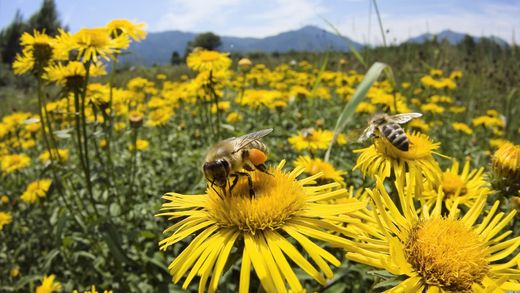
Elmwood - Local beekeepers are finding millions of their bees dead just after corn was planted here in the last few weeks. Dave Schuit, who has a honey operation in Elmwood, lost 600 hives, a total of 37 million bees.

"Once the corn started to get planted our bees died by the millions," Schuit said. He and many others, including the European Union, are pointing the finger at a class of insecticides known as neonicotinoids, manufactured by Bayer CropScience Inc. used in planting corn and some other crops. The European Union just recently voted to ban these insecticides for two years, beginning December 1, 2013, to be able to study how it relates to the large bee kill they are experiencing there also.

Local grower Nathan Carey from the Neustadt, and National Farmers Union Local 344 member, says he noticed this spring the lack of bees and bumblebees on his farm. He believes that there is a strong connection between the insecticide use and the death of pollinators.

"I feel like we all have something at stake with this issue," he said. He is organizing a public workshop and panel discussion about this problem at his farm June 22 at 10 a.m. He hopes that all interested parties can get together and talk about the reason bees, the prime pollinators of so any different plant species, are dying.

At the farm of Gary Kenny, south west of Hanover, eight of the 10 hives he kept for a beekeeper out of Kincardine, died this spring just after corn was planted in neighbouring fields.

What seems to be deadly to bees is that the neonicotinoid pesticides are coating corn seed and with the use of new air seeders, are blowing the pesticide dust into the air when planted. The death of millions of pollinators was looked at by American Purdue University. They found that, "Bees exhibited neurotoxic symptoms, analysis of dead bees revealed traces of thiamethoxam/clothianidin in each case. Seed treatments of field crops (primarily corn) are the only major source of these compounds.

Local investigations near Guelph, led to the same conclusion. A Pest Management Regulatory Agency investigation confirmed that corn seeds treated with clothianidin or thiamethoxam "contributed to the majority of the bee mortalities" last spring.

"The air seeders are the problem," said Ontario Federation of Agriculture director Paul Wettlaufer, who farms near Neustadt. This was after this reporter called John Gillespie, OFA Bruce County president, who told me to call Wettlaufer. Unfortunately, Wettlaufer said it was, "not a local OFA issue," and that it was an issue for the Grain Farmers of Ontario and representative, Hennry Vanakum should be notified. Vanakum could not be rached for comment.

Yet Guelph University entomologist Peter Kevan, disagreed with the EU ban.
....

Neonicotinoids Destroy 600 Hives, 37 Million Bees in Canada

Elizabeth Renter
by
June 29th, 2013
Updated 06/29/2013 at 6:44 am 

insectbeehoney1 263x164 Neonicotinoids Destroy 600 Hives, 37 Million Bees in CanadaA bee here or a hive there may be chalked up to chance of a landscaping company with heavy-handed pesticide applications, like the case where an estimated 25,000 bees were killed in a small Oregon town. But when millions of bees are dying at once, in locales across Canada, there may be something more serious afoot. One thing these casualties have in common—recent corn plantings and the related insecticides.
According to The Ontario Post, one local Elmwood beekeeper lost 600 hives, a total of 37 million bees following nearby corn planting. He and others believe the culprit may be a class of insecticides, neonicotinoids, made by Bayer CropScience Inc. A smaller operation in nearby Hanover was similarly wiped out this spring when neighboring farmers began planting corn.
“Once the corn started to get planted our bees died by the millions,” Dave Schuit said, the beekeeper who experienced the loss of 600 hives and 37 million bees. “I feel like we all have something at stake with this issue.”
Neonicotinoids were recently banned by the European Union for two years (a period starting Dec. 1, 2013) so that they can study how they are related to the dying bees in Europe. They are completely legal in both the U.S. and Canada, however.
The pesticides coat the corn seed. New air-seeders launch the seeds for planting while the pesticide dust is blown into the air. These tiny particles make their way to nearby honey operations and the bee population at large.
Purdue University looked closely at the mass casualties of U.S. bees and found, “Bees exhibited neurotoxic symptoms, analysis of dead bees revealed traces of thiamethoxam/clothianidin in each case. Seed treatments of field crops (primarily corn) are the only major source of these compounds.”
Sort of like injecting beef cattle with antibiotics “just in case”, farmers are using seeds covered with insecticides. This so-called preventative use does more harm than good in both cases.


Read More Here
....

2012 The Awakening


Again and again: 37 million bees found dead


© Unknown
 
Shortly after 50,000 bees were found dead in an Oregon parking lot (read more here), a staggering 37 million bees have been found dead in Elmwood, Ontario, Canada. Dave Schuit, who runs a honey operation in Elmwood has lost 600 hives. He is pointing the finger at the insecticides known as neonicotinoids, which are manufactured by Bayer CropScience Inc. This also comes after a recent report released by the British Beekeepers Association (BBKA) that recorded its largest loss of honeybees ever. You can read more about that here. The European Union has stepped forward, having banned multiple pesticides that have been linked to killing millions of bees. You can view the studies and read more about that here.
The loss comes after the planting of corn. Neonicotinoid pesticides are used to coat corn seed with air seeders. This results in having the pesticide dust blown into the air when planted. The death of millions of pollinators was studied by Purdue University. They discovered that Bees exhibited neurotoxic symptoms. They analyzed dead bees and found that traces of thiamethoxam/clothiandin were present in each case. The only major source of these compounds are seed treatments of field crops. You can view that study here (1).

Read More  Here

....

Save the Bees!


Scientists theorize that Colony Collapse Disorder may cause the next big extinction. This is because honeybees pollinate and pollination is an essential part of a stable ecosystem. Bees fly from stamen to stamen to collect pollen, to then spread to neighboring plants that can then accept the pollen, which allows the plants egg to develop into a source of food or shelter. This life cycle is vital for not just humans, but for all living organisms. To have a healthy terrestrial ecosystem, the plant, soil, and atmosphere must have beneficial or at least commensalistic interactions. In a community with CCD infected honeybees, there can be significant loss of plant life. For example, detritivores exist within a community to decompose dead material and this decomposition resupplies the soil with nutrients. If after a generation or two of lower honeybee populations, there would be less pollinated flowers, thus less fruit. In a local population sense, this would mean there would be a lower amount of fruits to decompose by the detritivores, which overall means there are fewer nutrients returned to the soil. That is just one simple example, but to imagine a whole country without pollinating bees would impact many other factors nationwide, such as photosynthetic levels. This is due to fewer seed set and plant growth, thus less carbon dioxide being converted into oxygen and organic compounds. In the big scheme of things, this would affect the atmosphere and the soil. It is hard to believe that every single thing in this world is connected, but these are just two examples that show that even a honeybee can affect the terrestrial environment.

If honeybee populations continue to fall this could potentially cost billions of dollars in the agriculture industry. Honeybees have estimated value of about $15 billion dollars in the United States, and over $215 billion dollars worldwide. It is estimated that one-third of the food eaten by U.S. citizens is thanks to honeybee pollination, either directly or indirectly. Not to mention that honeybee pollination plays an important role in pollination of other plants that are vital to maintaining an ecological balance (VanEngelsdorg 2009).
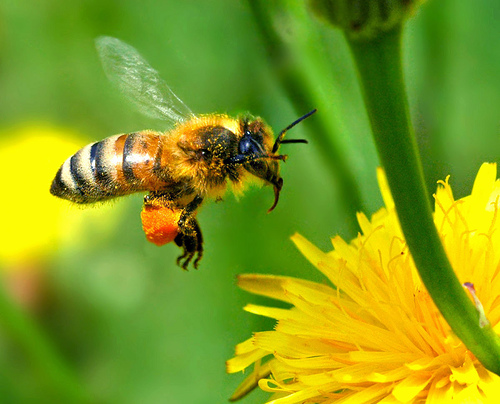


Since 2006 scientists have been trying to find some explanation for the disappearance of honeybees, but even after 6 years the data has come out inconclusive. There are many suspected causes for CCD, such as malnutrition, pathogens, immunodeficiency, pesticides, and genetically modified crops. Most researchers agree that while the exact cause of CCD remains unknown, it must be multiple factors working together that are causing the most serious die-off of honeybees ever reported. Albert Einstein once said, “If the bee disappears from the surface of the earth, man would have no more than four years to live. No more bees, no more pollination … no more men!” Nationwide there is an urgent plea for more funding and research to sustain the honeybee populations and now it rests in scientists hands to save the earth from possibly the next big extinction.

Read More Here

....

....


Enhanced by Zemanta