Showing posts with label EPA. Show all posts

Thursday, November 5, 2015

The same EPA that unleashed massive pollution in Colorado river now denying risk of harmful radioactive activity in St. Louis


NaturalNews's profile photo
NaturalNews
EPA


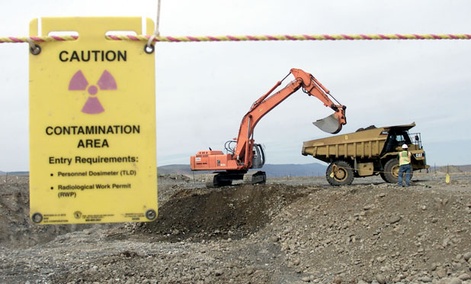
(NaturalNews) A five-year fire is burning beneath a landfill in a St. Louis suburb, and it's rapidly approaching an old cache of nuclear waste.

At present, St. Louis County emergency officials are unsure whether or not the fire will set off a reaction that releases a radioactive plume over the city. An emergency plan was put together in October 2014 to "save lives in the event of a catastrophic event at the West Lake Landfill."

St. Louis County officials warn, "There is a potential for radioactive fallout to be released in the smoke plume and spread throughout the region."

Many residents are taking precautions; some are buying gas masks, while others are considering moving away. Just recently, over 500 local residents discussed the precarious situation at a church meeting which usually draws in less than 50 people.

EPA not worried about the fire or the nuclear waste

Nothing stands in the way of the uncontrollable landfill fire, which is smoldering hot underneath the trash of the West Lake Landfill of Bridgeton County, St. Louis. This "smoldering event" is not uncommon. Fires ignite and smolder under landfills because the trash becomes so compact and hot. In this case, the fire is brewing less than a quarter mile from an old deposit of nuclear waste that threatens to spread cancer-causing radon gas.

Surprisingly, the Environmental Protection Agency (EPA) isn't taking the situation very seriously.

EPA officials admit that although the waste may eventually emit radon gas, it won't affect anything outside the landfill property. This is the same EPA that polluted the Colorado River with 3 million gallons of toxic sludge full of lead, arsenic and other heavy metals. EPA contractors breached a mine, sending the sludge flowing into the Animas river, which quickly turned putrid and murky. That pollution has now spread to New Mexico, Utah and Arizona, infiltrating the countryside with toxic elements. Why should anyone in St. Louis County trust the EPA with radioactive waste?

To make matters worse, the EPA isn't even worried about the fire reaching the nuclear waste. "We just do not agree with the finding that the subsurface smoldering event is approaching the radiologically impacted material," said Mary Peterson, director of the Superfund division for EPA Region 7.

There have been no plans to remove the radioactive waste as of yet, leaving local residents baffled and worried. Most residents were unaware of the existence of the radioactive waste, which had been dumped there illegally four decades ago. If it weren't for activists educating the public about the waste, no one would know.

Radioactive waste comes back to haunt St. Louis

The radioactive waste includes 8,700 tons of leached barium sulfate residue. It was illegally dumped in the West Lake Landfill by Cotter Corporation sometime after World War II and wasn't discovered by investigators until 1973. The radioactive waste was left behind due to the mishandling of uranium by Mallinckrodt Chemical Works, a company that started out working for the federal government's Manhattan Project.

Since 1990, the West Lake Landfill has been managed by the EPA and deemed a Superfund site. The U.S. Department of Health and Human Services Agency for Toxic Substances and Disease Registry recently warned all agencies not to disturb the surface of the landfill. They warned that radium-226, radon-222 and radium-228 could be released into the air, putting people near the landfill at risk.

The agency reported that radon levels in the area are often measured above regulations "by as much as 10 to 25 times at individual surface test locations." Moreover, radium increases people's risk of developing bone, liver and breast cancer.

The EPA is downplaying the potential for a Chernobyl or Fukushima-like disaster, but residents have every reason not to trust the agency's guesswork, given its decades-long refusal to safely remove the radioactive material from the area.

Sources:
LATimes.com

Collapse.news

STLToday.com

WashingtonTimes.com
............................................................................................

About NaturalNews

The NaturalNews Network is a non-profit collection of public education websites covering topics that empower individuals to make positive changes in their health, environmental sensitivity, consumer choices and informed skepticism. The NaturalNews Network is owned and operated by Truth Publishing International, Ltd., a Taiwan corporation. It is not recognized as a 501(c)3 non-profit in the United States, but it operates without a profit incentive, and its key writer, Mike Adams, receives absolutely no payment for his time, articles or books other than reimbursement for items purchased in order to conduct product reviews.

The vast majority of our content is freely given away at no charge. We offer thousands of articles and dozens of downloadable reports and guides (like the Honest Food Guide) that are designed to educate and empower individuals, families and communities so that they may experience improved health, awareness and life fulfillment.
Learn More About Natural News Here

.................................................................................................

stl today.com

Residents demand answers about radioactive Bridgeton landfill

October 15, 2015 10:45 pm  • 


Tonya Mason, who works just feet away from the fence line of Republic Services' landfill in Bridgeton, expresses anger that the air from burning underground material has never been tested for contaminants on Thursday, Oct. 15, 2015 at a meeting by Just Moms at John Calvin Presbyterian Church. Hundreds of people gathered to hear about the ongoing problems at the site. Photo by Christian Gooden, cgooden@post-dispatch.com


More than 40 years ago, radioactive waste was dumped at the West Lake Landfill in Bridgeton. The decades since have been filled with legal and political moves that have not gotten the site cleaned up.
Now a growing number of residents want to know how dangerous it is to live and work in the area as a fire burns underground in the adjoining Bridgeton Landfill. More than 500 people showed up at a Bridgeton church on Thursday for a meeting organized by residents. The monthly meetings held for the last two years typically attract no more than 50.


The surge in public interest comes after state reports showed the fire is moving toward the nuclear waste, and radioactive materials can be found in soil, groundwater and trees outside the perimeter of the landfill.

At least six school districts have sent letters home in the last week outlining their plans for a potential nuclear emergency. St. Louis County recently released its own emergency evacuation plan that was written last year.

Underground fires are common in landfills as buried garbage can get hot, much like the bottom of a compost pile. Typically they are monitored and allowed to burn out. But none of the fires have gotten so close to nuclear waste, which was created during the World War II era for St. Louis’ part in the production of the atomic bomb.


Read More Here

Tuesday, October 20, 2015

Environment Pollution - State of Connecticut, Waterbury : Heating Oil Spill


(WFSB photo) 
 
(WFSB photo)
WATERBURY, CT (WFSB) -


..........
 Environment PollutionUSAState of Connecticut, WaterburyDamage levelDetails
..........
Description
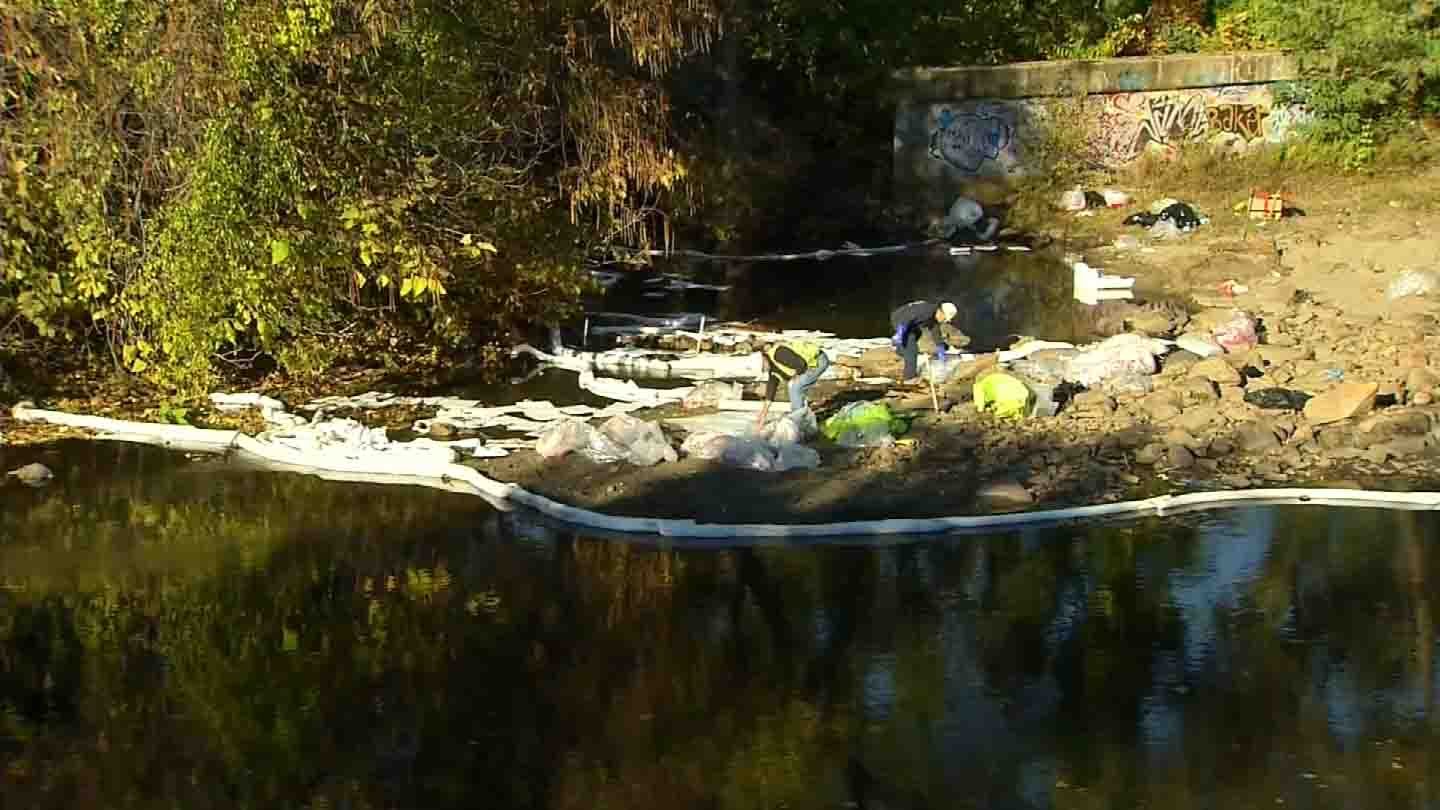
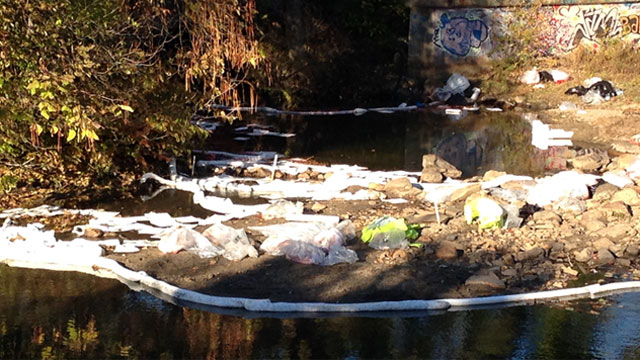
Department of Energy and Environmental Protection crews were on the scene of a Waterbury oil spill Monday, as 500 gallons of fuel spilled into the basement of the Exchange Place Towers on Center Street. This impacted a sump pump that discharged to the catch basin network. The catch basin network discharges to Great Brook which is tributary to the Naugatuck River. DEEP officials say an additional estimated 100 gallons of fuel reached the surface waters. Crews were able to contain most of the 100 gallons near where the brook meets the river. A contractor has been hired to assist in the cleanup of both the basement and surface water. No word on how long the cleanup process will take.
..........


Cleanup crews to return to oil spill site in Waterbury

Posted: Oct 20, 2015 6:19 AM CST Updated: Oct 20, 2015 6:19 AM CST
(WFSB photo) 
 
 (WFSB photo)
WATERBURY, CT (WFSB) - A near environmental disaster continued to be cleaned up in downtown Waterbury Tuesday.
 
More than 1,500 gallons of heating oil spilled in the basement of an apartment building on Center Street on Monday afternoon.

The Department of Energy and Environmental Protection then said a sump pump flushed hundreds of gallons of the fuel into the Naugatuck River, putting wildlife in danger.

 
..........


DEEP crews work to contain oil spill at Waterbury brook, building


An estimated 500 gallons of fuel spilled out into the basement of a Waterbury building with about 100 gallons spilling out into a nearby body of water on Monday.

Members of the emergency response unit from the Connecticut Department of Energy & Environmental Protection were called to an oil spill at the Exchange Place Towers, which is located at 44 Center St. DEEP said the leak started in the basement.

 
Continue reading >>
..........

Friday, October 2, 2015

Public Emergency Declared Over Elevated Lead Levels In Flint's Water

It's not the water supply. It's the plumbing.

<span class='image-component__caption' itemprop="caption">In this Tuesday, Feb. 3, 2015 photo, Genetha Campbell carries free water being distributed at the Lincoln Park United Methodist Church in Flint, Mich, Since the financially struggling city broke away from the Detroit water system last year, residents have been unhappy with the smell, taste and appearance of water from the city’s river as they await the completion of a pipe to Lake Huron. They also have raised health concerns, reporting rashes, hair loss and other problems. A General Motors plant stopped using the water, saying it was rusting its parts. (AP Photo/Paul Sancya)</span> ASSOCIATED PRESS In this Tuesday, Feb. 3, 2015 photo, Genetha Campbell carries free water being distributed at the Lincoln Park United Methodist Church in Flint, Mich, Since the financially struggling city broke away from the Detroit water system last year, residents have been unhappy with the smell, taste and appearance of water from the city’s river as they await the completion of a pipe to Lake Huron. They also have raised health concerns, reporting rashes, hair loss and other problems. A General Motors plant stopped using the water, saying it was rusting its parts. (AP Photo/Paul Sancya)

DETROIT (AP) -- A public health emergency has been declared in cash-strapped Flint after tests showed the Michigan city's water supply is causing elevated levels of lead in children and following months of complaints about the smell and taste.

Gov. Rick Snyder this week questioned the switch to the Flint River from the Detroit water system in 2014, a decision that was made as a cost-saving move while a new regional pipeline is built to Lake Huron.

And on Thursday, the Genesee County health department declared a public health emergency, recommending that people not drink the water unless it has been filtered and tested to rule out elevated levels of lead. More steps will be announced Friday.

The problem: Although the river water is treated, it is corrosive and releasing lead from old plumbing in thousands of homes.

A coalition of residents and national groups petitioned the U.S. Environmental Protection Agency to order the state to reconnect Flint to Detroit water.


Read More Here

Tuesday, March 11, 2014

Fracking Fluids Dumped Into The Ocean Off California Coast

missingsky102 missingsky102


Published on Mar 7, 2014
Fracking fluids dumped into the ocean
Environmentalists are trying to convince the EPA to ban the dumping of fracking fluids, in federal waters off the California coast. The Center for Biological Diversity claims that at least a dozen off shore rigs in Southern California are dumping wastewater right into the Pacific. RT's Ramon Galindo has the story.
Find RT America in your area: http://rt.com/where-to-watch/
Or watch us online: http://rt.com/on-air/rt-america-air/


RT's Ramon Galindo talks about a recent legal petition by environmental groups in California calling for the Federal government to force an end to the practice of offshore fracking, and the dumping of hundreds of millions of gallons of fracking waste in the ocean every year.

Abby Martin calls out Exxon CEO Rex Tillerson for his blatant hypocrisy after filing a lawsuit against a fracking water tower being built near his property.


Enhanced by Zemanta

Sunday, February 23, 2014

HAZMAT - State of North Dakota, Watford City

Earth Watch Report  -  Hazmat

N.D. filter socks

Casper Star-Tribune Online
.....
February 22 2014 06:10 PM HAZMAT USA State of North Dakota, Watford City Damage level Details

.....
Description
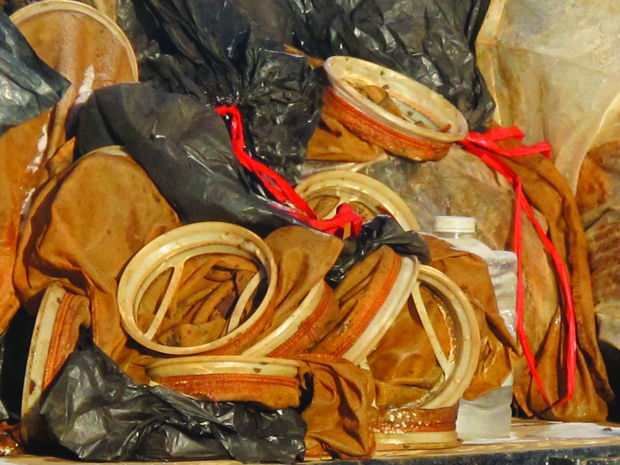
Federal and state health officials are investigating leaking trailers loaded with thousands of pounds of potentially radioactive filter socks and debris parked on rural property southwest of Watford City. A special agent with the Environmental Protection Agency criminal investigations unit is assigned to the case and a radiation control team from the state Health Department was on scene Friday. Brad Torgerson, with the state Health Department's waste management division, said the team determined that radiation levels "do not appear to present any public health hazards." He said the company, RP Services, of Riverton, Wyo., was told to put the waste in proper containers and submit a plan for cleanup. A formal enforcement action is possible, Torgerson said. EPA special agent Dan O'Malley contacted state health officials about the waste; when contacted by the Tribune, O'Malley said he could not confirm his agency's investigation. The RP Services trailers are parked on property owned by Russ and Mary Williams, whose separate company was involved in an illegal filter sock disposal that led to a $27,000 fine at the McKenzie County landfill operation last summer.

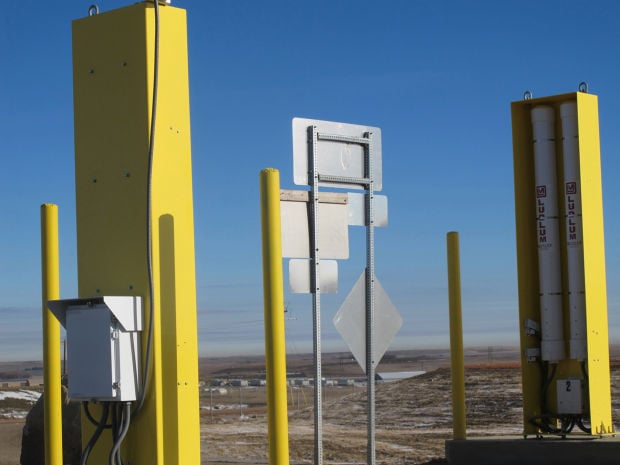
The filter socks are a notorious source of radioactive material because they concentrate naturally occurring radiation from geology down the well hole. The Health Department says the filters should not be landfilled anywhere in North Dakota and instead, should be handled by certified companies for disposal at hazardous waste sites in other states. The trailers loaded with the leaking material and filter socks were reported Thursday to McKenzie County landfill director Rick Schreiber. Schreiber has adopted a tough policy and his is the first landfill in the country to install radiation detection pedestals that monitor every load coming into the landfill. The Health Department is awaiting results of a study on radioactive oil field and other waste before deciding whether to raise its allowable limit of radiation and how disposal sites would be constructed. Because landfills won't take the socks and levy fines when haulers are caught bringing them in, they sometimes end up in community Dumpsters around towns and roadside ditches. Jerry Samuelson, McKenzie County's emergency manager, said the JP Services incident illustrates how oil development stretches local governments.

.....

Riverton company's trailers found leaking toxic material in N.D.


MCKENZIE COUNTY, N.D. — Federal and state health officials are investigating leaks from trailers loaded with thousands of pounds of potentially radioactive filter socks and debris parked on rural land in North Dakota.
The trailers are owned by a Wyoming company, RP Services. A North Dakota Health Department official said the Riverton company had been instructed to dispose of the waste in proper containers and submit a cleanup plan.
A special agent in the Environmental Protection Agency criminal investigations unit was assigned to the case, and on Friday, a radiation control team from the state Health Department showed up at the property, which is southwest of Watford City, N.D.
Brad Torgerson, of the state Health Department’s waste management division, said the team determined that radiation levels “do not appear to present any public health hazards.” Formal enforcement action is possible, Torgerson said.

Read More Here

.....
Enhanced by Zemanta

Friday, February 21, 2014

Silencing the Scientist: Tyrone Hayes on Being Targeted By Herbicide Firm Syngenta

democracynow democracynow


Published on Feb 21, 2014
http://www.democracynow.org - We speak with a University of California scientist Tyrone Hayes, who discovered a widely used herbicide may have harmful effects on the endocrine system. But when he tried to publish the results, the chemical's manufacturer launched a campaign to discredit his work. Hayes was first hired in 1997 by a company, which later became agribusiness giant Syngenta, to study their product, Atrazine, a pesticide that is applied to more than half the corn crops in the United States, and widely used on golf courses and Christmas tree farms. When Hayes found results Syngenta did not expect -- that Atrazine causes sexual abnormalities in frogs, and could cause the same problems for humans -- it refused to allow him to publish his findings. A new article in The New Yorker magazine uses court documents from a class-action lawsuit against Syngenta to show how it sought to smear Hayes' reputation and prevent the U.S. Environmental Protection Agency from banning the profitable chemical, which is already banned by the European Union.


Enhanced by Zemanta

Wednesday, January 22, 2014

EPA Draft Stirs Fears of Radically Relaxed Radiation Guidelines

Forbes

Jeff McMahon, Contributor

Gina McCarthy, US President Barack Obama's nominee to run the Environmental Protection Agency(EPA) oversaw the revision of the Protective Action Guide Manual (Image credit: AFP/Getty Images via @daylife)
The acting EPA director on Friday signed a revised version of the EPA’s Protective Action Guide for radiological incidents, which critics say radically relaxes the safety guidelines agencies follow in the wake of a nuclear-reactor meltdown, dirty-bomb attack, or other unexpected release of radiation.
Although the document is a draft published for public comment, it takes effect as an “interim use” guideline. And according to Public Employees for Environmental Responsibility (PEER), that means agencies responding to radiation emergencies may permit many more civilian fatalities.
“In soil, the PAGs allow long-term public exposure to radiation in amounts as high as 2,000 millirems,” PEER advocacy director Kirsten Stade said in a press release. “This would, in effect, increase a longstanding 1 in 10,000 person cancer rate to a rate of 1 in 23 persons exposed over a 30-year period.”
The non-binding document does not relax EPA’s standards, the agency has said in response to the criticism. But it directs agencies responding to radiation releases to standards at other agencies that are less stringent than EPA. Douglas Guarino has the scoop at NextGov, a publication that follows technology and government:
The new version of the guide released Friday does not include such dramatically relaxed guidelines in its text, but directs the reader to similar recommendations made by other federal agencies and international organizations in various documents. It suggests that they might be worth considering in circumstances where complying with [EPA's] own enforceable drinking water regulations is deemed impractical….
For example, the new EPA guide refers to International Atomic Energy Agency guidelines that suggest intervention is not necessary until drinking water is contaminated with radioactive iodine 131 at a concentration of 81,000 picocuries per liter. This is 27,000 times less stringent than the EPA rule of 3 picocuries per liter.

Read More Here
.....

Nextgov


EPA Relaxes Public Health Guidelines For Radiological Attacks, Accidents


Jackie Johnston/AP file photo
After years of internal deliberation and controversy, the Obama administration has issued a document suggesting that when dealing with the aftermath of an accident or attack involving radioactive materials, public health guidelines can be made thousands of times less stringent than what the U.S. Environmental Protection Agency would normally allow.
The EPA document, called a protective action guide for radiological incidents, was quietly posted on a page on the agency’s website Friday evening. The low-profile release followed an uproar of concern from watchdog groups in recent weeks over news that the White House had privately agreed to back relaxed radiological cleanup standards in certain circumstances and had cleared the path for the new EPA guide.
Agency officials had tried to issue the protective action guide during the final days of the Bush administration in January 2009, but the incoming Obama camp ultimately blocked its publication in part due to concerns that it included guidelines suggesting people could drink water contaminated at levels thousands of times above what the agency would typically permit.
The new version of the guide released Friday does not include such dramatically relaxed guidelines its text, but directs the reader to similar recommendations made by other federal agencies and international organizations in various documents. It suggests that they might be worth considering in circumstances where complying with its own enforceable drinking water regulations is deemed impractical.
Such circumstances could include the months – and possibly years – following a “dirty bomb” attack, a nuclear weapons explosion or an accident at a nuclear power plant, according to the guide, a nonbinding document intended to prepare federal, state and local officials for responding to such events.
For example, the new EPA guide refers to International Atomic Energy Agency guidelines that suggest intervention is not necessary until drinking water is contaminated with radioactive iodine 131 at a concentration of 81,000 picocuries per liter. This is 27,000 times less stringent than the EPA rule of 3 picocuries per liter.
“This is public health policy only Dr. Strangelove could embrace,” Jeff Ruch, executive director for the watchdog group Public Employees for Environmental Responsibility, said in a statement Monday, referring to Peter Sellers’ character in the Stanley Kubrick film of the same name.

Read More Here
.....
Enhanced by Zemanta

Saturday, January 18, 2014

Nuclear Event - State of Massachusetts, Plymouth [Pilgrim Nuclear Generating Station]

Earth Watch Report  -  Nuclear Event


Associated Press
In this Tuesday, Dec. 14, 2010 photo, retiree Bob Scamen stands near a discharge pipe for the Braidwood Nuclear Power Station about 300 feet from his property, in Braidwood, Ill., 50 miles southwest of Chicago. In 1998 the pipe poured out 3 million gallons of water but, at first, Scamen did not realize it was radioactive. Radioactive tritium has leaked from three-quarters of U.S. commercial nuclear power sites, often into groundwater from corroded, buried piping, an Associated Press investigation shows. The number and severity of the leaks has been escalating, even as federal regulators extend the licenses of more and more reactors across the nation. (AP Photo/Charles Rex Arbogast)
.....
 Nuclear EventUSAState of Massachusetts, Plymouth [Pilgrim Nuclear Generating Station]Damage levelDetails
.....
Description
The owner of the Pilgrim nuclear power plant has told the federal Nuclear Regulatory Commission that radioactive tritium has been discovered in a newly installed groundwater monitoring well at the plant. A sample taken from the well Dec. 30 indicated a tritium concentration of 69,000 picocuries per liter. Those levels dropped to 20,000 in samples taken Jan. 6 and to 14,300 after additional samples were obtained Jan. 9. The EPA limit for tritium in groundwater used for drinking purposes is 20,000 picocuries per liter. However, the groundwater at the Pilgrim site is not used for drinking. In 1991, the EPA calculated it would take a year-long ingestion of water containing 60,900 picocuries per liter of tritium to yield a radiation exposure dose of 4 millirems, a fraction of the approximately 620 millirems of radiation exposure that Americans receive each year from natural and manmade sources. Last April, Entergy identified a separation in its neutralizing sump discharge line. The company theorized, at that time, that this line was the source of tritium groundwater contamination first identified years earlier at the site. The new monitoring well is adjacent to the catch basin where the outfall from the sump discharge line was rerouted, which supports that theory. However, the NRC also said that additional monitoring will be necessary before it can conclusively rule out other possible sources. The NRC will continue to inspect and report on the company’s implementation of its groundwater monitoring and prevention activities, as specified by the Nuclear Energy Institute’s Groundwater Protection Initiative. In addition, any subsurface contamination will be reviewed to ensure that public health and safety are protected. Tritium is a radioactive isotope of hydrogen and is produced primarily by nuclear fission. Because it emits light in the dark, it can be used in exit signs, watch dials and some gun sights. It is also used to boost the yield of nuclear weapons.
.....


>Associated Press
This Tuesday, Nov. 13, 2007 file picture shows a cooling tower at the Salem nuclear power plant owned by the Public Service Energy Group and a building on a small farm in Lower Alloways Creek Township, N.J., in rural Salem County. One of the highest known tritium readings was discovered in 2002 at the Salem facility. Tritium leaks from the reactor's spent fuel pool contaminated groundwater under the facility _ located on an island in Delaware Bay _ at a concentration of 15 million picocuries per liter. That's 750 times the EPA drinking water limit. According to NRC records, the tritium readings last year still exceeded EPA drinking-water standards. And tritium found separately in an onsite storm drain system measured 1 million picocuries per liter in April 2010. (AP Photo/Mel Evans)

Tritium found at Pilgrim nuclear power plant

The owner of the Pilgrim nuclear power plant has told  the federal Nuclear Regulatory Commission that radioactive tritium has been discovered in a newly installed groundwater monitoring well at the plant.
A sample taken from the well Dec. 30 indicated a tritium concentration of 69,000 picocuries per liter. Those levels dropped to 20,000 in samples taken Jan. 6 and to 14,300 after additional samples were obtained Jan. 9.
The EPA limit for tritium in groundwater used for drinking purposes is 20,000 picocuries per liter. However, the groundwater at the Pilgrim site is not used for drinking.
In the NRC announcement of the discovery, the commission provided a link to more information on tritium contamination: www.nrc.gov/reading-rm/doc-collections/fact-sheets/tritium-radiation-fs.html.
In 1991, the EPA calculated it would take a year-long ingestion of water containing 60,900 picocuries per liter of tritium to yield a radiation exposure dose of 4 millirems, a fraction of the approximately 620 millirems of radiation exposure that Americans receive each year from natural and manmade sources.
Read More Here

.....
Enhanced by Zemanta

Thursday, October 24, 2013

Household Products May Harm Tree Swallows in Minnesota and Wisconsin

USGS - science for a changing world
Released: 10/23/2013 12:35:16 PM
..........
          ...

Contact Information:
U.S. Department of the Interior, U.S. Geological Survey
Office of Communications and Publishing
12201 Sunrise Valley Dr, MS 119
Reston, VA 20192Christine Custer 1-click interview
Phone: (608) 781-6247Marisa Lubeck 1-click interview
Phone: (303) 202-4765
0
Contamination from commercial products such as nonstick cookware and stain repellents could reduce the reproduction of tree swallows nesting in Minnesota and Wisconsin, according to a new U.S. Geological Survey study.
USGS scientists and partners found that tree swallow eggs exposed to elevated levels of these products, known as perfluoroalkyl substances (PFASs), were associated with a decreased chance of hatching. PFASs are common environmental contaminants that have been used in products such as water and stain repellents, nonstick cookware, surfactants such as detergents and wetting agents, and polymers (plastics). The report was recently published in Archives of Environmental Contamination and Toxicology.
"Even though PFASs seem to be declining in the environment, hot spots still remain," said Christine Custer, USGS Upper Midwest Environmental Sciences (UMESC) scientist and lead author of the study. "These high concentrations are localized, however, which fortunately reduces the potential for harm to swallow populations throughout Minnesota and Wisconsin."
Between 2007 and 2011, scientists compared hatching rates among tree swallow nests located at eight different study locations with different PFAS-contamination levels and sources in Minnesota and Wisconsin, including Lake Johanna and Pigs Eye Lake in the Twin Cities metropolitan area—two areas known for PFAS contamination. They tested an egg sample from each studied nest for PFAS concentrations and compared those results to how well the rest of the eggs hatched.
The USGS-led study suggested that tree swallow hatching rates declined at high PFAS concentrations (as high as 150-200 nanograms per gram of wet weight), which are lower than the concentrations that have affected other bird species in laboratory studies. This difference may be due to behavioral effects or other factors not accounted for in the laboratory studies. It could also mean that tree swallows are especially sensitive to these toxins.
PFASs can enter the environment through contaminated groundwater and surface water runoff from plants that manufacture or use PFAS products, from household waste water that passes through treatment plans, and from airborne chemicals settling on the ground. The Mississippi River downstream of St. Paul, Minn., may have been contaminated by a landfill used to dispose of PFAS-filled waste products.
Because of global exposure to humans and wildlife, selected PFASs were phased out of production starting in 2000.
This study was led by the USGS in collaboration with the U.S. Environmental Protection Agency, the State University of New York at Albany and the U.S. Fish and Wildlife Service.
Copies of the report are available by contacting Christine Custer at ccuster@usgs.gov or (608) 781-6247.
For more information on this and other Mississippi River Basin and contaminant-related avian studies, please visit the USGS UMESC website.
Enhanced by Zemanta