Showing posts with label solar flares. Show all posts

Tuesday, November 3, 2015

Swedish photographer captures sprawling sunspot complex, finds a spaceship hiding among its dark cores


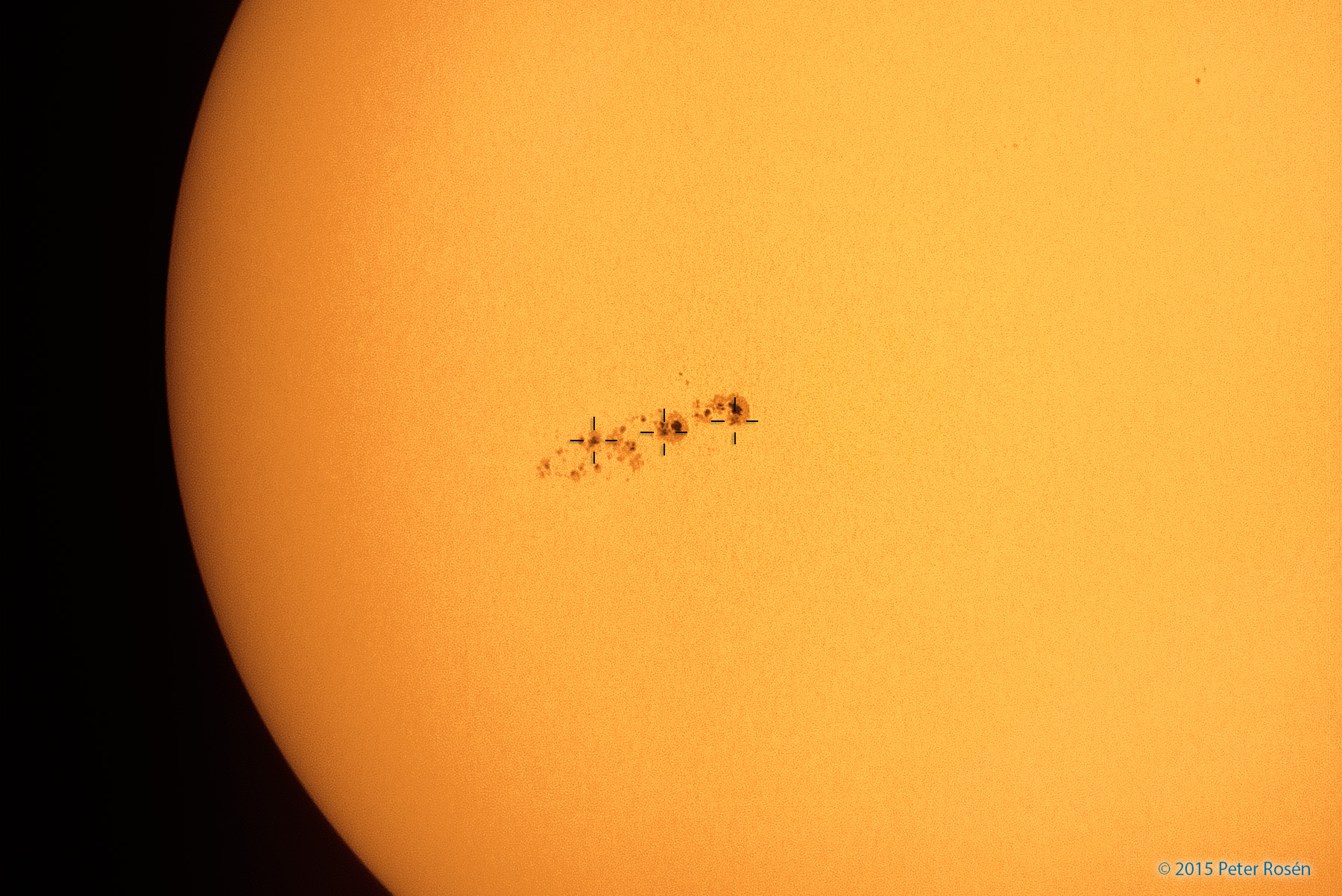
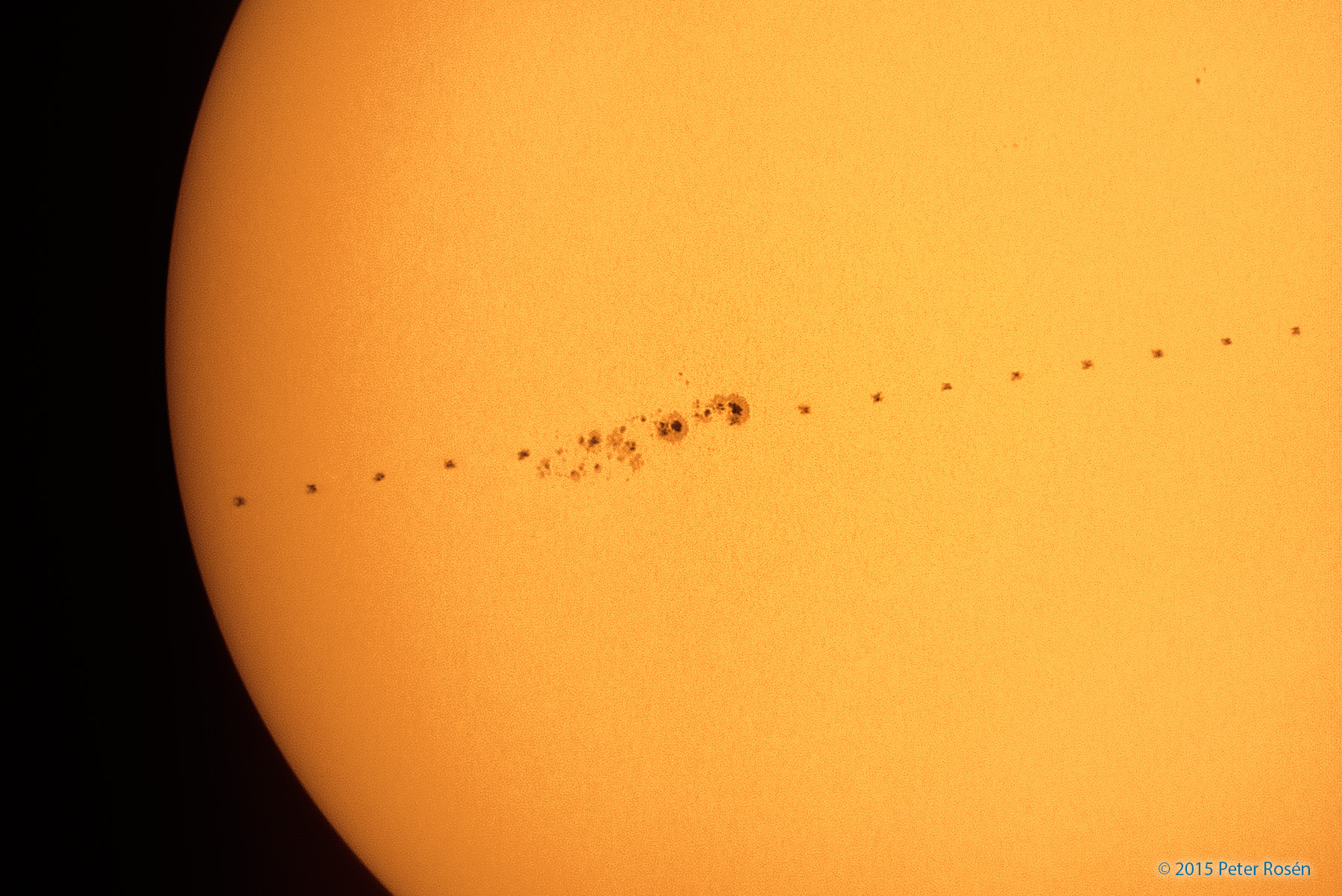
Sunspot AR2443 is so big, it is attracting the attention of astrophotographers around the world. Earlier today when Peter Rosén of Stockholm, Sweden, photographed the sprawling complex, he found a spaceship hiding among its dark cores. Seriously. Take a close look at the image below:


Can't find the spaceship? Click here and here. "It is the International Space Station," explains Rosén. "I caught it making a split-second transit of the giant sunspot."

Indeed, AR244 is huge. From end to end it measures almost 200,000 km. Many of the dark cores are as large as terrestrial continents--and a couple are as large as Earth itself. These dimensions make it an easy target for backyard solar telecopes.

Of greater interest is the sunspot's potential for explosive activity. The spotty complex has a 'beta-gamma' magnetic field that harbors energy for strong M-class solar flares. Any such explosions will be geoeffective as the sunspot turns squarely toward Earth in the days ahead.

Thursday, May 22, 2014

Solar Cycle 24 is near its peak right now and it continues to rank among the weakest on record, says Ron Turner of Analytic Services, Inc.

Space Weather
by Dr. Tony Phillips.

SOLAR 'MINI-MAX':


Last month at the Space Weather Workshop in Boulder, Colorado, solar cycle expert Doug Biesecker of NOAA announced that "Solar Maximum is here, finally." According to his analysis, the sunspot number for Solar Cycle 24 is near its peak right now.
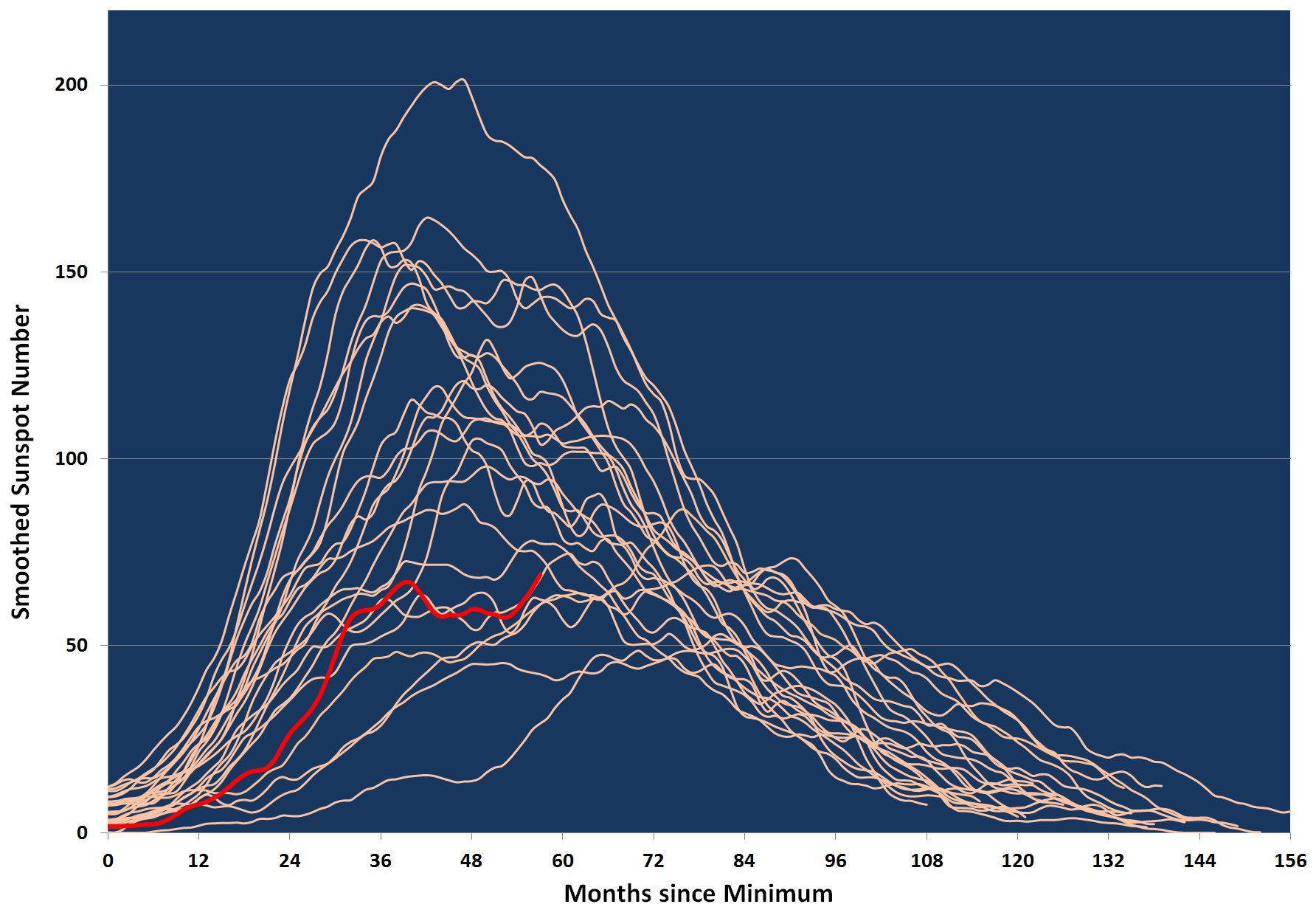
Spoiler: It's not very impressive. "This solar cycle continues to rank among the weakest on record," says Workshop attendee Ron Turner of Analytic Services, Inc. To illustrate the point, he plotted the smoothed sunspot number of Cycle 24 vs. the previous 23 cycles since 1755:
In the composite plot, Cycle 24 is traced in red. Only a few cycles since the 18th century have have had lower sunspot counts. For this reason, many researchers have started calling the ongoing peak a "Mini-Max."
"By all Earth-based measures of geomagnetic and geoeffective solar activity, this cycle has been extremely quiet," notes Turner. "However, Doug Biesecker has presented several charts showing that most large events such as strong flares and significant geomagnetic storms occur in the declining phase of the solar cycle."
In other words, there is still a chance for significant solar activity in the months and years ahead. Let's just hope it is not too significant.
Enhanced by Zemanta