
Earth Watch Report - Biological Hazards - Mass Animal Die-off (dolphins)
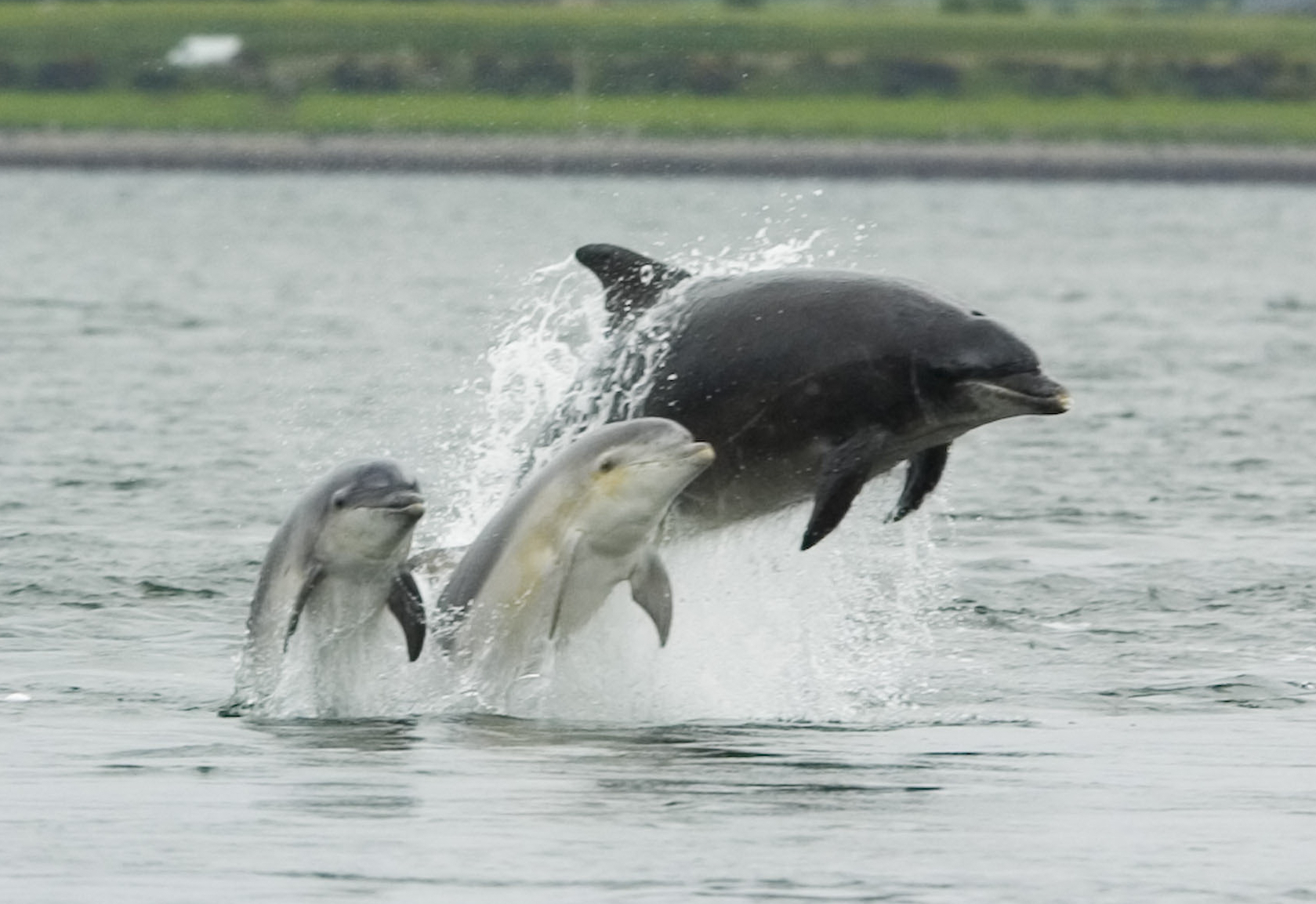
Image Source : Wikipedia
Photographer: Peter Asprey, http://www.peter-asprey.com/
...
| 06.08.2013 | Biological Hazard | USA | State of Virginia, [Chesapeake Bay coastal regions] |  |  |
Biological Hazard in USA on Tuesday, 06 August, 2013 at 09:06 (09:06 AM) UTC.
| Description | |
|
Scientists are working to unravel why there has been a surge in the
number of beached dolphins found along the eastern coast of the U.S.. A
total of 44 bottlenose dolphins were found in July, washed up along the
southern part of Chesapeake Bay in Virginia - around eight times as many
as normal, according to the Virginia Aquarium Stranding Response Team.
Researchers are struggling to work out the cause of the deaths, but
suspect a virus is to blame, as a similarly morbid bout of dolphin
deaths occurred in 1987 and were the result of a measles-like disease.
The National Oceanic and Atmospheric Administration has asked stranding
centres situated along the coastline to record the number of dead
dolphins found in a bid to find a pattern in the spikes. Susan Barco,
research coordinator for the Virginia Aquarium & Marine Science
Centre, told The Virginian-Pilot : 'We've had a steady number coming in
at the beginning of the summer, and starting last week, the numbers
spiked...We're just trying to keep our head above water.' The states of
Delaware and Maryland has also seen a rise in dolphin deaths and
according to a report in The Press of Atlantic City, around 10 dead
dolphins were found in a month - double that than usually recorded.
Scientists in New Jersey have reportedly said necropsy results have
indicated pneumonia might be to blame, but a spokesman for NOAA's
National Marine Fisheries Service admitted no-one knows what is causing
the mysterious dolphin deaths but data is being collected. However, the stranding team in Virginia said the numbers of dolphins found beached reminds them of mass deaths that occurred in 1987, when over 750 carcasses were washed ashore between Florida and New Jersey. It took a few years to determine that morbillivirus - a disease similar to the measles - was to blame but the dolphins did show symptoms similar to those of measles and pneumonia. Ms Barco said: 'It's eerily familiar...That is one virus we're looking for now.' Bottlenose dolphins live in pods of between two and 15 creatures off the East Coast of the US and spend the majority of the year in the warmer southern waters, before moving to the bays of the Mid-Atlantic between may and October, Bob Schoelkopf, director of the Marine Mammal Stranding Center in Brigantine, New Jersey. A total of 87 dolphin carcasses including those of the bottlenose species, have been collected by the response team in Virginia so far this year, compared to a usual count of 87 dolphins for the entire calendar year. Volunteers have had the unenviable task of collecting the dolphin remains - many of which are already very decomposed - which are analysed by marine biologists. It is difficult for the scientists to gain valuable information about any suspected virus when the carcasses are in bad shape. The volunteers are combing the coast to find bodies of newly-dead dolphins to give the scientists a better chance of finding animals that might help them come up with the reason for the deaths. Krystle Rodrique, a volunteer with the Virginia Aquarium Stranding Response Team described the smell of the pinky-white carcasses as a cross between a pet shop and rotting fish. She told The Virginian-Pilot: 'You get used to the smell, but I never can really get it off my hands...I try to scrub them over and over again.' Ms Barco said the volunteers have not seen any physical marks of trauma on the dolphins' bodies that would indicate they have gotten tangled in nets or confused by sonar systems used by the Navy, that have been blamed for whale and dolphin beachings in the past. Ted Brown, a spokesman for the Navy's Fleet Forces Command in Norfolk, told The Virginian-Pilot there has been no change or increase in sonar use that could be related to the increase in dolphin deaths. Around 60 volunteers plus interns and permanent staff are working in Virginia to determine the cause of the deaths but they do not have specialist labs and are working from tents. It found baleen whale species, which include the blue whale, react to the mid frequency noises by changing behaviour. This includes altering foraging so they miss out on high-quality prey, which could make them weak and decimate numbers through starvation. The soundwaves, developed by the military to track enemies beneath the waves, are between 1 and 10 kHz, which is within the human hearing band. They have been blamed for lethal mass stranding of deep diving toothed whales. Sonar is thought to disrupt the animals’ diving behaviour so much that they suffer a condition rather like ‘the bends’. |
|
| Biohazard name: | Mass. Die-off (dolphins) |
| Biohazard level: | 0/4 --- |
| Biohazard desc.: | This does not included biological hazard category. |
| Symptoms: | |
| Status: | confirmed |

Mystery of the dead dolphins of Virginia: Scientists suspect killer virus could be to blame for East Coast strandings
44 dead dolphins have been washed up along the U.S. state of Virginia in July - eight times more than normal
A disease similar to measles wiped out over 750 dolphins in 1987 and scientists are keen to unravel the mystery to help the surviving mammals
Volunteers are collecting dolphin carcasses - which do not appear to show signs of physical trauma - for further examination
|
Scientists are working to unravel why there has been a surge in the number of beached dolphins found along the eastern coast of the U.S..
A total of 44 bottlenose dolphins were found in July, washed up along the southern part of Chesapeake Bay in Virginia - around eight times as many as normal, according to the Virginia Aquarium Stranding Response Team.
Researchers are struggling to work out the cause of the deaths, but suspect a virus is to blame, as a similarly morbid bout of dolphin deaths occurred in 1987 and were the result of a measles-like disease.
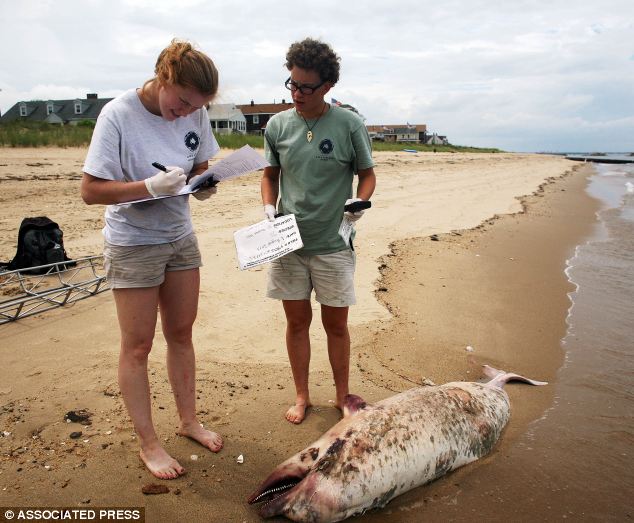
Scientists are working to unravel the cause of a
surge in the number of dolphin deaths as a number of stranded mammals
have been found beached along East Coast US states. Volunteers Krystal
Rodrique (left) and Liz Schell (right) record observations of a deceased
male dolphin in Norfolk Virginia
Susan Barco, research coordinator for the Virginia Aquarium & Marine Science Centre, told The Virginian-Pilot : 'We've had a steady number coming in at the beginning of the summer, and starting last week, the numbers spiked...We're just trying to keep our head above water.'
The states of Delaware and Maryland has also seen a rise in dolphin deaths and according to a report in The Press of Atlantic City, around 10 dead dolphins were found in a month - double that than usually recorded.
Scientists in New Jersey have reportedly said necropsy results have indicated pneumonia might be to blame, but a spokesman for NOAA's National Marine Fisheries Service admitted no-one knows what is causing the mysterious dolphin deaths but data is being collected.

The volunteers load a deceased male dolphin onto
a metal stretcher on the beach in Virginia. This was their third
dolphin retrieval of the day. Officials are trying to determine the
cause of a sharp increase in dolphin deaths in Virginia and other East
Coast states
It took a few years to determine that morbillivirus - a disease similar to the measles - was to blame but the dolphins did show symptoms similar to those of measles and pneumonia.
Ms Barco said: 'It's eerily familiar...That is one virus we're looking for now.'
SONAR HAS BEEN RULED OUT
While
it appears sonar is not to blame for the dolphins deaths,it could be
killing blue whales, according to a study by the Cascadia Research
Collective based in Washington.
It found baleen whale species, which include the blue whale, react to the mid frequency noises by changing behaviour.
This includes altering foraging so they miss out on high-quality prey, which could make them weak and decimate numbers through starvation.
The soundwaves, developed by the military to track enemies beneath the waves, are between 1 and 10 kHz, which is within the human hearing band.
They have been blamed for lethal mass stranding of deep diving toothed whales.
Sonar is thought to disrupt the animals’ diving behaviour so much that they suffer a condition rather like ‘the bends’.
Read More Here
...
Related articles


