Showing posts with label MERS-CoV. Show all posts

Friday, August 23, 2013

Saudis cite 2 more MERS cases; Italian cluster profiled

Saudi Arabia today reported two more Middle East respiratory syndrome coronavirus (MERS-CoV) cases, plus the death of a previously reported case-patient, according to a machine-translated statement provided by FluTrackers, an online infectious-disease message board.
One case involves a 50-year-old Saudi citizen who has cancer and other chronic diseases and is in a hospital intensive care unit, said the statement from the Saudi Ministry of Health (MOH). The other involves a 70-year-old resident who also has chronic diseases and is in intensive care. No other details on the cases were provided.
Both new cases and the death occurred in the Riyadh region, the statement said. The patient who died was a 54-year-old man who also suffered from chronic diseases.
The MOH's English language MERS-CoV media page currently shows that Saudi Arabia has had 79 cases with 40 deaths.
Following the new report, the US Centers for Disease Control and Prevention (CDC) updated its MERS-CoV page to show a global count of 99 cases, with 48 deaths.
The World Health Organization (WHO) has not yet noted the two new Saudi cases, nor has it recognized three other cases reported earlier this week: two in Saudi Arabia on Aug 19 and one in Qatar on Aug 20.
In other MERS developments, Italian officials published a report today on their investigation of the three cases that occurred in Italy in late May and early June, offering a few new details. The report appears in Eurosurveillance.
The cases started with a previously healthy 45-year-old man from Florence who got sick at the end of a 40-day stay in Jordan and who, after returning to Italy, passed the virus to an 18-month-old relative (identified in press reports as a niece) and a co-worker who was in her early 40s.
The 18-month-old girl had close contact with the index case-patient on May 26, when he spent the day with her and her family, the report says. The co-worker and the case-patient shared an office where both worked on May 27.


Read More Here


Enhanced by Zemanta

Saturday, August 10, 2013

Blood study suggests camels could be MERS-CoV carriers

Earth Watch Report  -  Biological Hazards

File:Camel in Giza.jpg
Image Source  :  Wikimedia.org
Author kallerna

File:Camel and it's rider in Giza.jpg
Image Source  :  Wikimedia.org
Author kallerna
...
Lisa Schnirring | Staff Writer | CIDRAP News
Aug 08, 2013
A WHO spokesman said the findings in camels provide clues, but the issue of how humans are being infected is still unresolved.
Researchers who conducted blood tests on animals from different regions found evidence that camels have been exposed to the Middle East respiratory syndrome coronavirus (MERS-CoV) or a very close relative, the outbreak's first strong clue about a possible animal reservoir.
Until now, the only animal clue has been from genetic sequencing studies, which suggested the virus came from bats. Though there are no reports that any of the patients had contact with bats, a man from the United Arab Emirates who was treated for his fatal infection in Germany had been exposed to a sick racing camel.
The investigators, mostly from the Netherlands and Germany, reported their findings today in The Lancet Infectious Diseases.
The first MERS-CoV illness was reported a year ago, and so far 94 cases and 46 deaths have been confirmed by the World Health Organization (WHO), all of them from or linked to Middle Eastern countries.
Human-to-human infections have been rare, and health officials suspect that an animal reservoir could be playing a yet unknown key role in the spread of the new virus.
The research team obtained 349 blood serum samples from livestock animals including dromedary camels, cows, sheep, goats, and other animals closely related to dromedaries. The animals were from different areas, including Oman, the Netherlands, Spain, and Chile.
They analyzed the blood samples for antibodies to MERS-CoV, other antibodies that react to SARS (severe acute respiratory syndrome) coronavirus, and HCoV-OC43, another strain of coronavirus that can infect humans and is related to a bovine form of the virus.
No cross-reactivity was seen between MERS-CoV antibodies and those for SARS or HCoV-OC43, and the team confirmed those findings with highly specific virus neutralization tests. Presence of MERS-CoV antibodies probably shows previous infection with MERS-CoV, or a closely related virus, the group reported.
No MERS-CoV antibodies were found in the blood of 160 animals from the Netherlands and Spain, but evidence of earlier exposure to the virus was found in all 50 samples taken from dromedary camels in Oman. Sampling in Oman involved camels from different parts of the country, suggesting that MERS-CoV or a close relative is circulating widely in the region's dromedary camels, the authors reported.
No antibodies were found in animals from the Netherlands and Chile that are closely related to dromedaries, such as Bactrian camels, alpacas, and llamas.
Lower levels of MERS-CoV antibodies were found in 14% (15) of samples taken from two herds of dromedaries from the Canary Islands, a Spanish island group located off the coast of mainland Africa that has not reported any human MERS-CoV cases.
The authors said in a journal press release that the dromedaries from Oman were positive more often and had much higher antibody MERS-CoV antibody levels than the ones from Spain. "The best way to explain this is that there is a MERS-CoV-like virus circulating in dromedary camels, but that the behavior of this virus in the Middle East is somehow different to that in Spain," they noted.
The findings suggest dromedary camels may be one reservoir for MERS-CoV and that their popularity in the Middle East, where they are used for racing, meat, and milk, presents a variety of contacts with humans that could lead to virus transmission, the investigators said in the press release.


Read More Here


Enhanced by Zemanta

Thursday, June 20, 2013

Epidemic Hazard Saudi Arabia MultiProvinces, [Provinces of Eastern and Al-Qassim] UPDATE


Earth Watch Report  -  Epidemic  Hazards
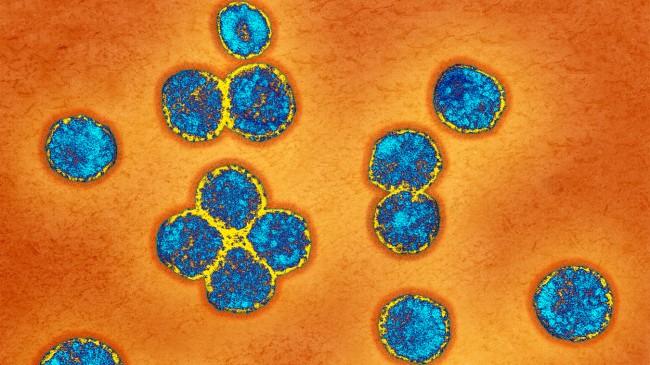


Image Source
***************************************************************************
17.06.2013Epidemic HazardSaudi ArabiaMultiProvinces, [Provinces of Eastern and Al-Qassim]Damage level
Details
....

Epidemic Hazard in Saudi Arabia on Thursday, 02 May, 2013 at 07:12 (07:12 AM) UTC.

Back
Updated: Monday, 17 June, 2013 at 10:17 UTC
Description
Saudi Arabia says four more people have died from a new respiratory virus related to SARS, bringing the total number of deaths to 32 in the kingdom at the center of the growing crisis. Overall, nearly 40 people have died from the virus since September, mostly in Europe and the Middle East. That̢۪s according to local officials and the World Health Organization. The Saudi Health Ministry also said on Monday that it confirmed three more cases of the virus, including in a 2-year-old child. Officials are stillReport: Saudi MERS hospital outbreak had some SARS-like traits seeking clues on how easily it is spread between humans. The new virus is related to SARS, which killed some 800 people in a global epidemic in 2003, and belongs to a family of viruses that most often causes the common cold.
....

CIDRAP

Report: Saudi MERS hospital outbreak had some SARS-like traits

Jun 19, 2013 (CIDRAP News) – A study of the recent hospital outbreak of MERS-CoV (Middle East respiratory syndrome coronavirus) in Saudi Arabia reveals, among other things, that the virus spread in three hospitals and that some patients transmit it much more than others do.
The report, published today in the New England Journal of Medicine, shows that 21 of 23 cases involved person-to-person transmission in healthcare facilities, and that 9 cases were in hemodialysis patients.
Testing of more than 400 healthcare workers and household contacts of MERS patients turned up only 7 additional cases, the report says, which supports previous findings that the virus doesn’t spread very readily. Investigators found that some patients didn't spread the virus to anyone else, but one of them infected seven others.
The report was prepared by a large international team with members from Saudi Arabia, Canada, the United Kingdom, and the United States.
All the hospitals involved are in Al-Hufuf (also spelled Al-Hofuf) in Al-Ahsa governorate of eastern Saudi Arabia. The report covers 23 confirmed cases that were identified between from Apr 1 to May 23; 11 probable cases also are considered part of the outbreak.
As of Jun 12, 15 of the 23 patients (65%) had died, 6 had recovered, and 2 remained hospitalized, the report says. Most of the patients were men, and the median age was 56. Disease manifestations included fever in 20 patients, cough in 20, shortness of breath in 11, and gastrointestinal symptoms in 8.
Most of the cases occurred at one general hospital, called hospital A, which has 150 beds, plus a dialysis unit. The event began on Apr 5 with admission of a patient with dizziness and sweating, followed by a fever 3 days later. He was not tested for MERS-CoV, but his son later had a confirmed case.
Another patient, who was on dialysis, was admitted Apr 6 and put in a room next to the first patient. By Apr 11 he had a fever, and he underwent dialysis in the hospital on Apr 11 and 13. Between Apr 14 and 30, MERS-Cov was confirmed in nine more patients who were receiving dialysis in hospital A. Eight of these cases developed before or within 1 day after infection control steps were taken in the dialysis unit.
One dialysis patient who had a confirmed MERS-CoV infection was admitted to a medical ward on Apr 21. In the following week, two other patients, located two and three rooms away from the dialysis patient, fell ill with the infection.
The virus spread to "hospital C" when a patient who was infected at hospital A underwent dialysis at hospital C while sick. Two other patients at the latter hospital subsequently were infected.
In addition, eight MERS-CoV patients were transferred to "hospital D," a regional referral hospital. One of those patients passed the virus to two others at hospital D, and another passed it to a physician there, the authors concluded.
The team monitored 217 household contacts of patients with confirmed cases. They found only five cases—three confirmed and two probable—in adult relatives of three of the patients. One of them was treated at another hospital, "hospital B," where the report lists no other cases.
Only two confirmed cases were detected among more than 200 healthcare workers who were monitored after exposure, according to the report.
In mapping transmission chains, the team found that one patient passed the infection to seven other people, one passed it to three others, and four transmitted it to two persons each. The authors say this variability in transmission is "reminiscent of SARS" (severe acute respiratory syndrome), which is caused by another coronavirus. Some patients in the SARS epidemic in 2003 were described as "super spreaders."
The median incubation period in the outbreak was 5.2 days (95% confidence interval, 1.9 to 14.7 days). On the basis of recent MERS cases, the World Health Organization has said the incubation time may run as long as 10 to 14 days.
The investigators obtained full genome sequences from isolates from four patients. From a phylogenetic analysis of these sequences and from other data, they estimated that the date of the most recent common ancestor of MERS-CoV was Aug 18, 2011. This broadly agrees with the conclusion of a German team that, in a Lancet Infectious Diseases report this week, estimated the date of the most recent common ancestor as mid-2011.
The authors were unable to determine if the hospital outbreak involved just one, or more than one, transmission of the virus from the community.
Also, they couldn't answer another key question about the virus: whether person-to-person transmission occurred through respiratory droplets or direct or indirect contact and whether aerosol transmission occurred over a distance of more than 1 meter.
The report says the pattern of the outbreak is consistent with the assumption that patients were infectious only when they had symptoms, but this doesn't rule out transmission during the incubation period or during asymptomatic infection.
In other findings, the authors note that the survival rate was higher for patients who were identified through active surveillance than for those who were identified clinically. They say the likely reason was that active surveillance was better at picking up less-severe disease.
Assiri A, McGeer A, Perl RM, et al. Hospital outbreak of Middle East respiratory syndrome coronavirus. N Engl J Med 2013 (Early online publication). [Abstract]


******************************************************************************

CDC expert reports some anomalies in Jordan MERS cases

Jun 19, 2013 (CIDRAP News) – Eight Jordanians who had MERS-CoV (Middle East respiratory syndrome coronavirus) infections in a hospital outbreak more than a year ago, as determined by recent blood tests, didn't quite match the profile of more recent cases, according to a CDC expert.
Most of the eight people did not have preexisting diseases, and one of them had no symptoms, said Mark Pallansch, PhD, director of the CDC's Division of Viral Diseases.
The majority of MERS-CoV cases reported in recent months involved patients who had preexisting health problems such as diabetes or heart disease. And the asymptomatic case appears to be the first one reported.
The eight cases were associated with a hospital outbreak in Zarqa, Jordan, in April 2012. The cause of the outbreak was a mystery at the time, because MERS-CoV was not discovered until June of last year, when a Saudi man died of his infection.
The Jordan outbreak involved 11 cases, 2 of them fatal. Samples from the patients were stored, and later analysis led to confirmation of the virus in the two fatal cases. The WHO said the other cases probably were MERS, but that couldn't be confirmed.
Earlier this week a Canadian Press report revealed that serologic (antibody) tests of 124 people related to the Jordan cluster had turned up 8 more cases, raising the number of confirmed cases in the outbreak to 10. The testing was done by the CDC in collaboration with Jordanian health officials.
Pallansch provided more details on the study in an interview. He cautioned that the findings are preliminary, because the CDC has had few serum samples from MERS-CoV patients with which to validate the two new serologic tests that were used.
"There's always a caveat that we could have subsequent testing change some of the results," he said.
Six of the eight cases were in healthcare workers and were part of the hospital illness cluster, Pallansch said.
One of the other two, the asymptomatic case, was in a household contact of one of the confirmed cases, he reported. The other one involved a healthcare worker who worked at the same hospital as the others. That person "by recall did have an illness, but was not considered part of the cluster at the time," he said.
Among the other six case-patients, "there was a range of illness, but all were hospitalized, so it was reasonably severe," Pallansch said.
He said he is not aware of any other asymptomatic MERS-CoV cases. Such cases are considered important because they suggest that people who aren't sick can unknowingly spread the virus. Asymptomatic cases are likely to be discovered only through serologic tests, which for MERS-CoV have become available only recently.
Pallansch said he couldn't give any information about how the first case-patient in the Jordanian cluster might have caught the virus or about the patients' possible animal exposures. Officials are still working on their report, he explained.
"This is a report that will go back to the Jordanian Ministry of Health, and they'll make decisions about how it will be disseminated or published," he said. 

See also: 
 
Related Jun 17 CIDRAP News story
 
Nov 30, 2012, CIDRAP News story

******************************************************************************


Bloomberg Business Week

AP News

New MERS virus spreads easily, deadlier than SARS

By By Maria Cheng
June 19, 2013
LONDON (AP) — A mysterious new respiratory virus that originated in the Middle East spreads easily between people and appears more deadly than SARS, doctors reported Wednesday after investigating the biggest outbreak in Saudi Arabia.
More than 60 cases of what is now called MERS, including 38 deaths, have been recorded by the World Health Organization in the past year, mostly in Saudi Arabia. So far, illnesses haven't spread as quickly as SARS did in 2003, ultimately triggering a global outbreak that killed about 800 people.
An international team of doctors who investigated nearly two dozen cases in eastern Saudi Arabia found the new coronavirus has some striking similarities to SARS. Unlike SARS, though, scientists remain baffled as to the source of MERS.
In a worrying finding, the team said MERS (Middle East respiratory syndrome) not only spreads easily between people, but within hospitals. That was also the case with SARS, a distant relative of the new virus.
"To me, this felt a lot like SARS did," said Dr. Trish Perl, a senior hospital epidemiologist at Johns Hopkins Medicine, who was part of the team. Their report was published online Wednesday in the New England Journal of Medicine.
Perl said they couldn't nail down how it was spread in every case — through droplets from sneezing or coughing, or a more indirect route. Some of the hospital patients weren't close to the infected person, but somehow picked up the virus.
"In the right circumstances, the spread could be explosive," said Perl, while emphasizing that the team only had a snapshot of one MERS cluster in Saudi Arabia.
Cases have continued to trickle in, and there appears to be an ongoing outbreak in Saudi Arabia. MERS cases have also been reported in Jordan, Qatar, the United Arab Emirates, Britain, France, Germany, Italy and Tunisia. Most have had a direct connection to the Middle East region.
In the Saudi cluster that was investigated, certain patients infected many more people than would be expected, Perl said. One patient who was receiving dialysis treatment spread MERS to seven others, including fellow dialysis patients at the same hospital. During SARS, such patients were known as "superspreaders" and effectively seeded outbreaks in numerous countries.
Perl and colleagues also concluded that symptoms of both diseases are similar, with an initial fever and cough that may last for a few days before pneumonia develops.
But MERS appears far more lethal. Compared to SARS' 8 percent death rate, the fatality rate for MERS in the Saudi outbreak was about 65 percent, though the experts could be missing mild cases that might skew the figures.
While SARS was traced to bats before jumping to humans via civet cats, the source of the MERS virus remains a mystery. It is most closely related to a bat virus though some experts suspect people may be getting sick from animals like camels or goats. Another hypothesis is that infected bats may be contaminating foods like dates, commonly harvested and eaten in Saudi Arabia.

Read More  Here

******************************************************************************

Friday, June 14, 2013

MERS-CoV (Middle East respiratory syndrome coronavirus) cases continued today with Saudi Arabia reporting three more, including a fatal one, pushing the unofficial global count over 60.


Image Source


CIDRAP

More MERS-CoV cases reported in Saudi Arabia


Jun 14, 2013 (CIDRAP News) – The trickle of MERS-CoV (Middle East respiratory syndrome coronavirus) cases continued today with Saudi Arabia reporting three more, including a fatal one, pushing the unofficial global count over 60.

The Saudi Ministry of Health (MOH) said two of the cases are in Taif governorate, which lies near Mecca in the western part of the country. They involve a 65-year-old Saudi citizen and a 68-year-old female citizen, both of whom have chronic illnesses and are in hospital intensive care units. The ministry didn't say if the patients are related or otherwise epidemiologically linked.

The other case-patient, a 46-year-old male "resident" in Wadi Al-Dawasir, died today, the MOH said. Wadi Al-Dawasir is a town in Riyadh province in the country's central highlands. The statement gave no other details about the patient.

All three cases occurred far from the Al-Ahsa region of eastern Saudi Arabia, where most of the country's recent cases have been reported, including a hospital-centered outbreak involving 25 cases and 14 deaths.

The new cases raise the MOH's posted MERS-CoV count to 46, including 28 deaths. They also boost the unofficial global count to 61 cases and 34 deaths.

As Saudi Arabia announced the three new cases today, the World Health Organization issued a statement recognizing the three cases that the country reported 2 days ago. Those involve a 63-year-old woman from the Eastern region, a 75-year-old man from Al-Ahsa governorate, and a 21-year-old man from Hafar Al-Batin governorate who died.

The Saudi announcement of those cases on Jun 12 listed the two older patients as Saudi citizens and the young man as a resident. With the three cases, the WHO's MERS-CoV tally rose to 58 cases and 33 deaths. (The US Centers for Disease Control and Prevention [CDC] raised its own count today to 61 cases and 34 deaths.)

In other developments, Italy has detected no more MERS-CoV cases after monitoring contacts of its first three patients for 2 weeks, according to a machine-translated government statement that was cited by Michael Coston of the Avian Flu Diary blog. The incubation period for the virus is currently estimated at 9 to 12 days.

Italy's first case was in a 45-year-old hotel worker who fell ill after returning to Italy following a 40-day stay in Jordan; his illness was reported on May 31. Subsequently the man's 2-year-old niece and a 42-year-old female coworker were infected, according to earlier reports. The three were hospitalized in Florence.


Read  More  Here

Wednesday, June 12, 2013

Saudis report three more MERS-CoV cases, one fatal

Earth Watch  -  Epidemic Hazards


....

CIDRAP

Jun 12, 2013 (CIDRAP News) – Saudi Arabia, epicenter of MERS-CoV (Middle East respiratory syndrome coronavirus) outbreaks, reported three more cases today, one of them fatal, while media reports said French authorities ruled out two suspected cases.
Meanwhile, a Canadian expert who recently traveled to Saudi Arabia to help investigate the cases there said more international collaboration will be needed to figure out the source of the virus, according to a Canadian Press report.
In a brief statement today, the Saudi Ministry of Health (MOH) said a 21-year-old "resident" of the country died of a MERS-CoV infection and that two Saudi citizens are sick. The 21-year-old was living in Hafr Al-Batin, a city in the Eastern province but about 300 miles north of Al-Ahsa, site of a recent hospital-centered outbreak.
The young man died after being admitted to a hospital intensive care unit (ICU) at the beginning of this week, the MOH said. The ministry did not list his home country or give any other details about him. World Health Organization (WHO) officials have expressed concern that guest workers from developing countries such as the Philippines could contract the virus in Saudi Arabia and carry it back home.
The MOH said one of the other new cases involves a 63-year-old Saudi woman who lives in the Eastern region, has chronic diseases, and is in stable condition. The third case, the statement said, is in a 75-year-old Saudi who lives in Al-Ahsa governorate and is being treated in an ICU. The patient, whose gender was not listed, also has chronic health problems.
The three illnesses raise Saudi Arabia's MERS-CoV count to 43 cases and 27 deaths. Unofficially, they raise the global total to 58 cases and 33 deaths.
In France, MERS-CoV was ruled out in illnesses in two men who had recently been in Saudi Arabia, according to reports from Agence France-Presse (AFP) and other media outlets. The suspected cases were first reported yesterday.
"The virus was quickly ruled out as an explanation for the symptoms of one of them, and tests cleared the other one," the AFP story said. The men were reported to be hospitalized in Tours.
France has had two confirmed MERS-CoV cases, with one death. The first and fatal case was in a man who got sick after vacationing in Dubai in April; another man caught the virus while sharing a hospital room with him.
In Canada, Allison McGeer, MD, a Toronto infection control expert, said a greater international effort will be needed to learn where MERS-CoV hides in nature and how it makes its way into humans, according to the Canadian Press report, published yesterday.
McGeer was part of a team led by the WHO that returned from Saudi Arabia Jun 9 after spending several days investigating the MERS-CoV situation.
Daniel Jernigan, MD, MPH, of the US Centers for Disease Control and Prevention (CDC) was also part of the team, but he couldn't discuss the mission, CDC officials told CIDRAP News yesterday.
McGeer said the Saudi government has done much to investigate MERS-CoV cases involving human-to-human transmission and sporadic cases, "but it's very clear that a great deal more work needs to be done," according to the Canadian Press story.
Among the more than 50 MERS-CoV cases so far, a good share have resulted from person-to-person transmission, and relatively few apparently resulted from contact with the virus's source in nature, McGeer said. Disease detectives must investigate the latter to identify the source.
Because those cases are spread over several countries, coordinating the search has been difficult, McGeer said.


****************************************************************************
Global News


WHO mission says there is no evidence MERS is spreading widely in Saudi Arabia

By Helen Branswell, The Canadian Press
A colorized transmission of the MERS coronavirus that emerged in 2012 is shown. A team of international experts says there is no evidence that the MERS coronavirus is spreading widely person-to-person in Saudi Arabia.
A colorized transmission of the MERS coronavirus that emerged in 2012 is shown. A team of international experts says there is no evidence that the MERS coronavirus is spreading widely person-to-person in Saudi Arabia. THE CANADIAN PRESS/HO, National Institute for Allergy and Infectious Diseases
A team of international experts says there is no evidence that the MERS coronavirus is spreading widely person-to-person in Saudi Arabia.
The team, pulled together by the World Health Organization, concluded a six-day fact finding mission to Saudi Arabia on Sunday.
Canadian SARS expert Dr. Allison McGeer was a member of the mission.
The group says given that cases of the new infection have been picked up in a number of European countries, health-care workers everywhere should be on the look out for MERS cases.
They say hospitals treating unexplained cases of pneumonia would consider that MERS may be the cause of infection.
To date there have been 55 cases of infection with the MERS virus, which is a cousin of the SARS coronavirus; 31 of the cases have died.
All of the infections have had a link to four countries on the Arabian Peninsula: Saudi Arabia, Qatar, Jordan and the United Arab Emirates. The lion’s share of the cases have been reported by Saudi Arabia.
The team’s report, posted on the website of the WHO’s Eastern Mediterranean regional office, says three patterns of infections have been noted to date.